Every person’s skin is unique; some tan easily, some develop dark patches, while others struggle with uneven tone. The reason behind these differences lies in a natural pigment called melanin. Melanin is responsible for the color of your skin, hair, and eyes, and it also plays a vital role in protecting the skin from sun damage. When melanin production is balanced, the skin appears healthy and evenly toned. However, excess or reduced melanin can lead to skin pigmentation, hyperpigmentation, or deficiency-related skin concerns.
In this blog, we explain what is melanin skin, why pigmentation occurs, and how to reduce or increase it safely. We also explore the link between melanin and vitamin D deficiency and common skin disorders, using clear, dermatologist-backed insights.
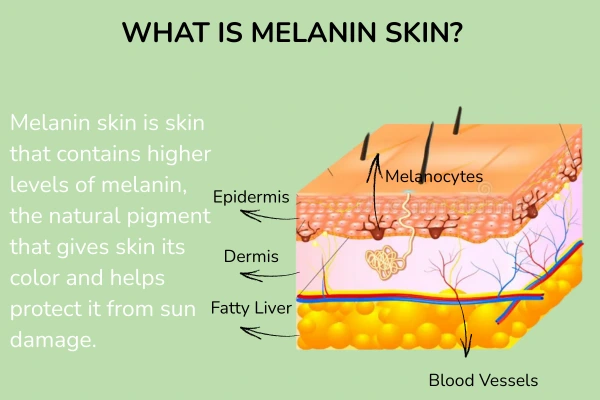
Melanin is a naturally occurring pigment that is produced by specialised skin cells known as melanocytes. These cells are located in the basal layer of the epidermis and are responsible for producing melanin and distributing it to surrounding skin cells.
Melanin in the skin refers to the amount, distribution, and activity of melanin present in the skin, which directly influences skin tone and pigmentation patterns.
To make it clear:
It does not mean unhealthy skin.
More melanin does not always mean darker tone.
Less melanin does not mean fair or better skin.
Melanin’s primary function is to:
Protect skin from UV radiation
Reduce DNA damage
Slow premature aging
Maintain skin barrier integrity
But when melanin production becomes imbalanced, it leads to skin pigmentation disorders and hyperpigmentation concerns.
Types of Melanin in Human Skin
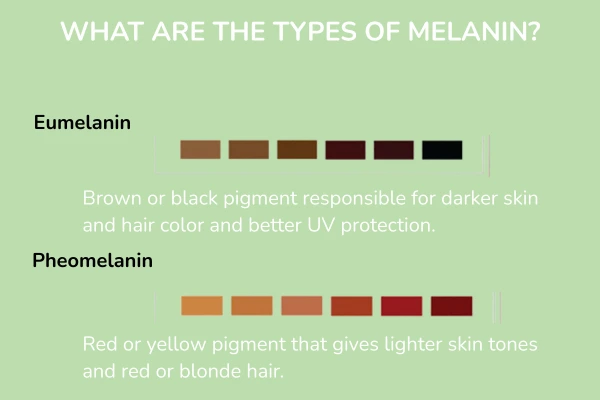
Human skin produces three main types, and the ratio between them determines skin tone, hair color, and pigmentation behavior.
Eumelanin: This is what gives skin its brown and black color. It is the dominant melanin in individuals with medium to dark skin tones and offers significant protection against UV radiation, reducing sun damage risk.
Pheomelanin: Produces yellow to reddish tones and is commonly seen in lighter skin, lips, and certain hair colors. Unlike eumelanin, pheomelanin provides minimal UV protection, which explains increased sun sensitivity.
Neuromelanin: Present in specific areas of the brain and does not influence skin or hair color but plays a role in neurological protection.
Note: People with higher eumelanin tend to tan easily, while those with more pheomelanin are more prone to sunburn and pigmentation.
How Is Melanin Produced in the Skin?
Melanin production is a highly regulated biological process. It begins when melanocytes are stimulated by internal or external triggers such as sunlight, inflammation, or hormonal changes. Once activated, melanocytes convert the amino acid tyrosine into melanin through a series of enzymatic reactions, primarily involving the enzyme tyrosinase.
After melanin is produced, it is packaged into tiny structures called melanosomes. These melanosomes are then transferred to surrounding skin cells, where they settle and determine the visible color of the skin. While the number of melanocytes remains similar in most individuals, variations in its production, melanosome size, and distribution create differences in skin tone.
When this process functions smoothly, skin appears evenly pigmented. However, overstimulation of melanocytes can cause excess melanin deposition, leading to skin pigmentation or hyperpigmentation.
Where Is Melanin Produced in the Body?
Melanin production does not occur in a single organ. Instead, it is produced wherever melanocytes are present.
Skin: The highest melanin activity occurs in the basal layer of the epidermis.
Hair: Melanocytes at the hair follicle base determine hair color.
Eyes: Melanin in the iris defines eye color.
Inner ear: Melanin contributes to auditory function.
Brain: Certain regions produce neuromelanin.
What Causes Increased Melanin Production?
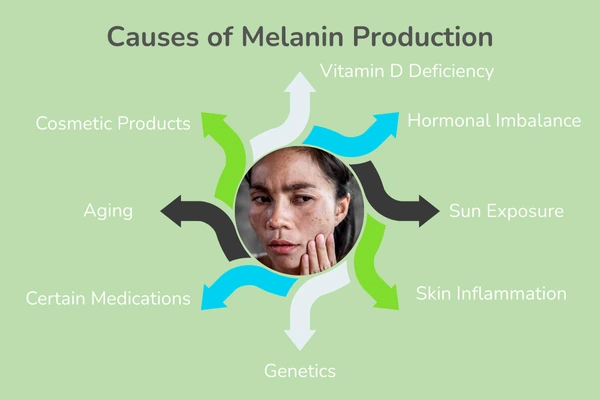
Excess melanin production rarely occurs without a trigger. Dermatologists identify these contributing factors:
Sun Exposure
Ultraviolet (UV) radiation is the strongest stimulator of melanin. Prolonged or unprotected sun exposure signals melanocytes to produce more pigment as a defense mechanism, resulting in tanning and sun-induced hyperpigmentation.
Hormonal Influence
Hormonal changes during pregnancy, thyroid disorders, PCOS, or the use of oral contraceptives can activate melanocytes, leading to melasma and hormonal pigmentation.
Inflammation and Skin Injury
Acne, burns, rashes, and aggressive cosmetic procedures can cause inflammation in the skin. During healing, melanin production increases, often leaving post-inflammatory hyperpigmentation (PIH).
Vitamin D Deficiency
Low vitamin D levels can disrupt melanocyte regulation, making the skin more prone to uneven pigmentation and delayed recovery from pigmentation disorders.
Underlying Skin Disorders
Certain disorders directly affect melanin activity, either increasing or decreasing pigment production.
What Is Melanin Deficiency and How Do Melanin Skin Disorders Occur?
Melanin deficiency occurs when melanocytes fail to produce adequate pigment or are damaged. This can lead to lighter patches of skin, increased sun sensitivity, and a higher risk of skin damage.
Imbalance in its production can lead to various skin disorders, such as
Vitiligo
Albinism
Post-inflammatory hypopigmentation
People with melanin deficiency often require medical supervision and long-term protection strategies.
How Melanin Affects Hair Color
Hair color is determined by melanin type and concentration within hair follicles. Higher eumelanin levels produce black or brown hair, while increased pheomelanin leads to red or lighter shades. With age, melanin production reduces, leading to graying.
How to Reduce Melanin and Treat Hyperpigmentation Safely
Reducing melanin does not mean removing it completely. The main goal is to control excess melanin activity while preserving the skin’s natural defense mechanism.
Sun Protection Is Essential
Daily use of a broad-spectrum sunscreen helps prevent further melanin stimulation and protects existing pigmentation from worsening.
Dermatologist-Recommended Topical Treatments
Clinically proven ingredients such as vitamin C, azelaic acid, retinoids, kojic acid, and hydroquinone help regulate melanin production and improve skin tone.
How to Increase Melanin When the Skin Lacks Pigment
In cases of melanin deficiency, dermatologists focus on stimulating melanocyte activity and protecting existing pigment. This may include nutritional correction, antioxidant support, controlled sun exposure with protection, and evaluation of autoimmune or nutritional causes.
Self-treatment or aggressive treatments should be avoided, as they may worsen pigmentation imbalance.
The Link Between Melanin, Vitamin D Deficiency, and Skin Health
Melanin influences how efficiently the skin synthesizes vitamin D from sunlight. Higher melanin levels can reduce vitamin D production, while vitamin D deficiency can also disrupt melanocyte function. This two-way relationship explains why dermatologists often evaluate vitamin D levels in patients with chronic pigmentation concerns.
When Should You Consult a Dermatologist?
You should seek professional advice if:
Pigmentation is spreading or recurring.
Dark patches do not respond to skincare.
Pigmentation follows acne or injury
Skin tone changes affect confidence.
Early intervention leads to better, long-lasting results.
It is essential for skin protection and overall health. Problems arise only when its production becomes imbalanced. Understanding how melanin works empowers you to make informed decisions and choose treatments that are safe, effective, and medically sound.
If skin pigmentation or hyperpigmentation is affecting your confidence, personalized dermatological care can help restore balance and clarity. For online consultation click here.
Evenly Skin and Hair Clinic – HSR Layout
Third Floor, 815, 27th Main Rd, above Bluestone, 1st Sector, HSR Layout, Bengaluru, Karnataka 560102
Evenly Skin and Hair Clinic – Jayanagar
35, Ground Floor, Vinyas Arcade, 11th Main Rd, Vishya Bank Colony, 5th Block, Jayanagar, Bengaluru, Karnataka 560041
Melanin skin refers to the amount, type, and distribution of melanin present in the skin. Melanin is a natural pigment that gives color to the skin, hair, and eyes while also protecting the skin from UV damage. Balanced melanin results in healthy, even-toned skin.
How does skin get melanin?
Skin gets melanin through melanocytes located in the basal layer of the epidermis. These cells produce melanin and transfer it to surrounding skin cells, where it determines visible skin color and tone.
What causes skin pigmentation and hyperpigmentation?
Skin pigmentation is natural, while hyperpigmentation occurs due to excess melanin. Common triggers include sun exposure, hormonal changes, inflammation, acne, vitamin D deficiency, and certain skin disorders.
Is having more melanin bad for the skin?
No. Higher melanin levels offer better natural sun protection. Problems arise only when melanin becomes unevenly distributed, leading to hyperpigmentation or dark patches.
Does melanin make skin fair or dark?
Melanin determines skin color based on its type and quantity. More melanin results in darker tones, while less melanin leads to lighter tones. It does not determine skin health or beauty.
Can melanin levels change over time?
Yes. Melanin levels can change due to age, sun exposure, hormones, inflammation, pregnancy, and certain skin disorders. This is why pigmentation may appear or fade at different stages of life.
We hope this information is helpful. If you have any skin and hair-related questions or would like to discuss personalized solutions, please reach out to us at 7337899030. Our team of specialists is committed to delivering personalized care tailored to your specific needs. Take the first step towards a healthier, more confident you by scheduling a consultation with us today. Your journey to vibrant skin and stronger hair begins here.
Post Views:653
Book an Appointment
Start your journey to healthy skin and hair today.





Leave a Comment