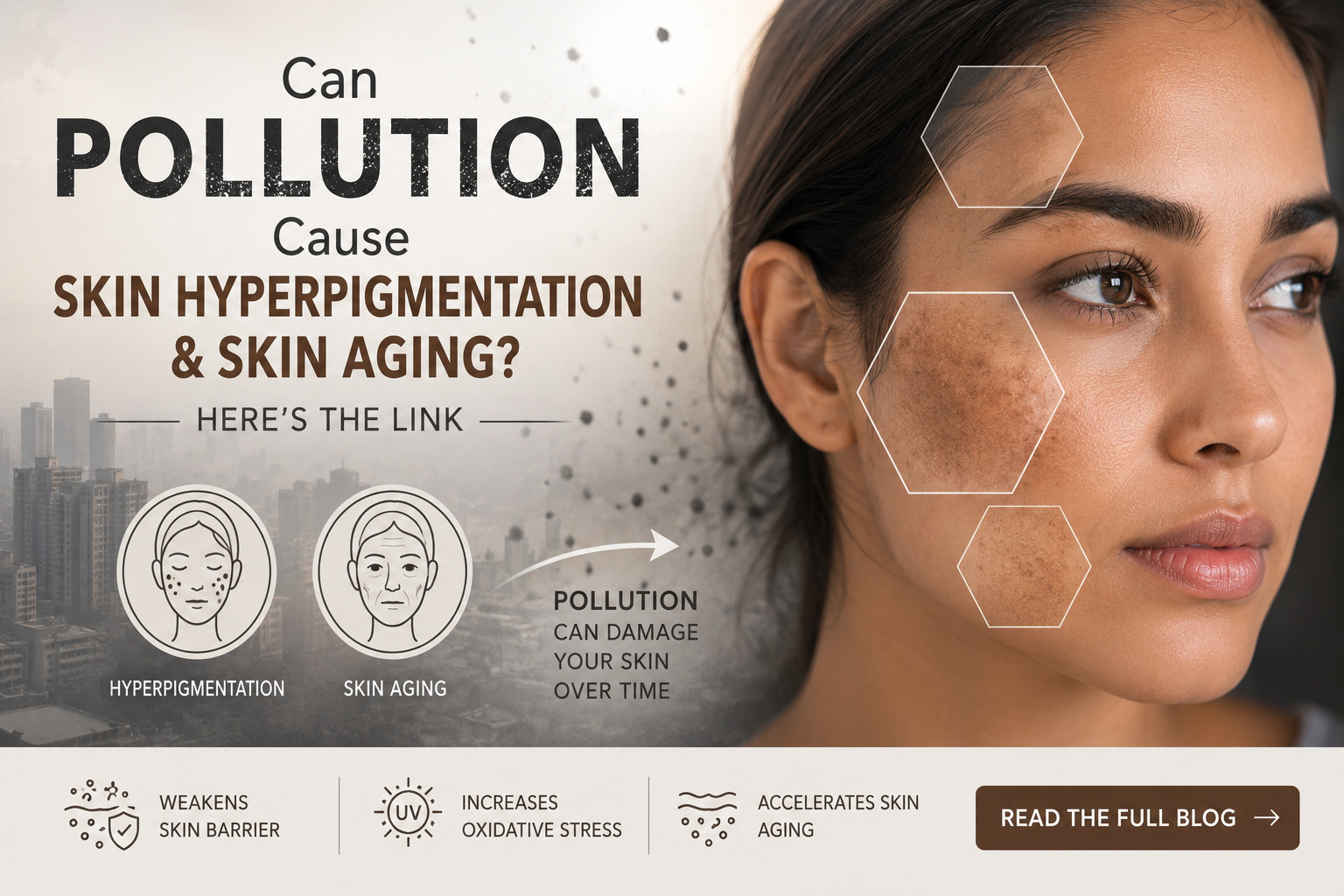
If you live in Bangalore, your skin battles far more than just the sun. Every day, whether you’re commuting through traffic, walking past construction sites, or simply stepping outdoors, your skin is exposed to dust, vehicle emissions, smoke, and UV rays. While you can wash away the visible dirt at the end of the day, you can’t wash away the invisible damage pollution leaves behind. Beneath the surface, it quietly weakens your skin barrier, accelerates skin aging, and increases melanin production, eventually leading to hyperpigmentation. If your skin has become dull, uneven, or developed stubborn dark spots despite following a skincare routine, pollution could be the hidden culprit. But can pollution really cause hyperpigmentation? Let’s explore what dermatologists know about the link between pollution, hyperpigmentation, and premature skin aging, and what you can do to protect your skin.
Why Bangalore Residents Often Notice Pigmentation Earlier?
Many people assume that skin hyperpigmentation is caused only by sun exposure. However, dermatologists are increasingly observing a pattern among residents of bustling cities like Bangalore: pollution and hyperpigmentation frequently coexist.
Think about a typical day. By the time you reach home, your skin has already spent hours defending itself against environmental pollutants without you even realising it.
Vehicle exhaust
Dust and construction particles
Smoke and airborne pollutants
UV radiation
Heat and humidity fluctuations
Individually, each factor may seem harmless. Together, they create continuous stress on your skin.
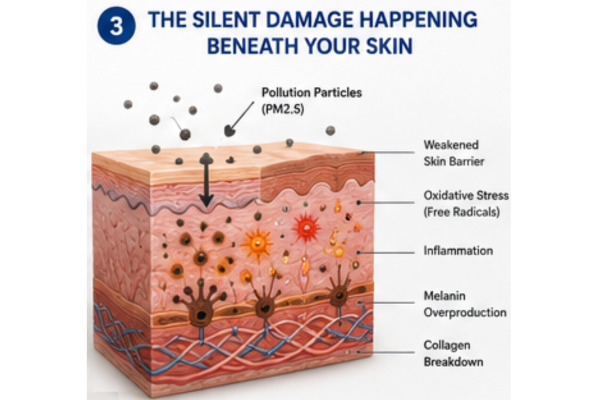
The Silent Damage Happening Beneath Your Skin
Pollution doesn’t just sit on your skin; it starts a chain reaction. Once these tiny particles contact your skin, they generate free radicals that damage healthy skin cells and trigger oxidative stress. The effects aren’t visible immediately, but they build up day after day.
This is where the connection between skin aging, pollution & hyperpigmentation becomes important.
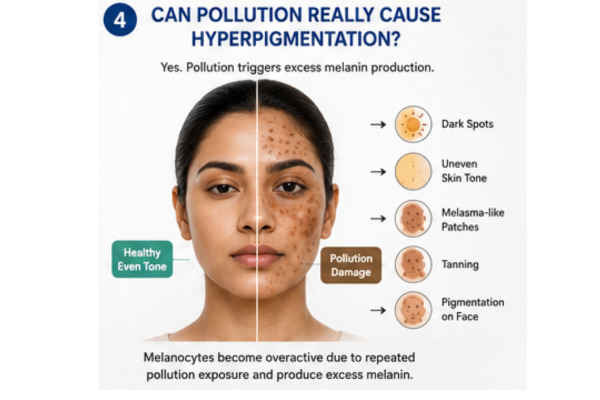
Can Pollution Really Cause Skin Hyperpigmentation?
Yes. In fact, dermatologists today recognise pollution as one of the environmental factors that can contribute to hyperpigmentation, especially in people living in busy urban cities like Bangalore.
Your skin produces melanin to protect itself from environmental damage. When pollution repeatedly irritates the skin, melanocytes (pigment-producing cells) become overactive.
Instead of producing an even amount of pigment, they start creating excess melanin in certain areas.
Pigmentation around the cheeks, forehead, and upper lip
This is why many people search for hyperpigmentation treatment on their faces even when they already use sunscreen regularly.
Why Pollution Makes Existing Pigmentation Worse
Pollution doesn’t just create new pigmentation; it can also make old pigmentation harder to fade.
Inflammation caused by pollutants keeps the skin in a constant state of stress. As a result, dark spots may:
Stay visible for longer
Appear darker after sun exposure
Return repeatedly
Respond slowly to home remedies
This is one of the reasons many people feel their pigmentation “comes back” even after trying multiple creams or remedies. Unless the underlying trigger is addressed, the problem may continue to recur.
The Link Between Pollution and Skin Aging
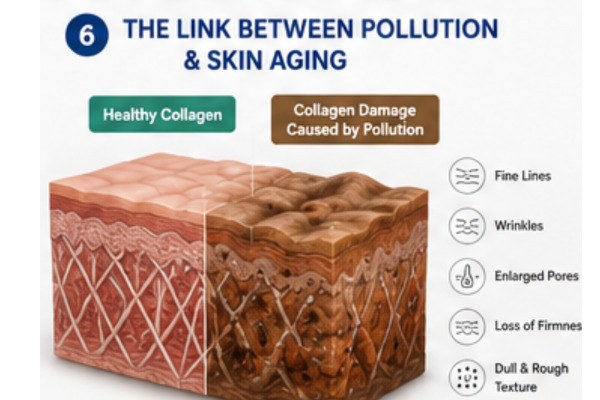
While dark spots are often the first thing people notice, pollution doesn’t stop there. It continues to damage the deeper layers of your skin, where collagen and elastin keep your skin firm and youthful.
Collagen and elastin are the proteins that keep skin firm, smooth, and youthful. Free radicals generated by pollution gradually break down these proteins.
This process is known as environmental skin aging.
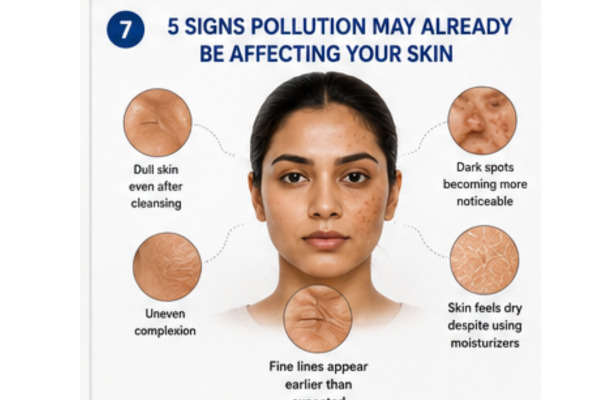
Five Signs Pollution May Already Be Affecting Your Skin
If you notice any of the following, pollution could be taking a toll on your skin:
Your skin looks dull even after cleansing.
Dark spots are becoming more noticeable.
Your complexion appears uneven.
Fine lines seem to appear earlier than expected.
Your skin feels dry despite using moisturisers.
Can Skincare Alone Reverse Pollution Damage?
A good skincare routine is essential, but it has limitations.
Antioxidants such as vitamin C, niacinamide, and vitamin E help neutralise free radicals. Sunscreen protects against UV-induced pigmentation. Moisturisers support the skin barrier.
But when pigmentation becomes deeper or collagen loss has already begun, topical products alone may not be enough. At this point professional hyperpigmentation treatment solutions help target the damage more effectively.
When Should You Consider Professional Skin Hyperpigmentation Treatment?
If your pigmentation doesn’t improve despite using sunscreen and skincare consistently, it may be time to consult a dermatologist. Professional treatments work below the skin’s surface, where topical products simply cannot reach.
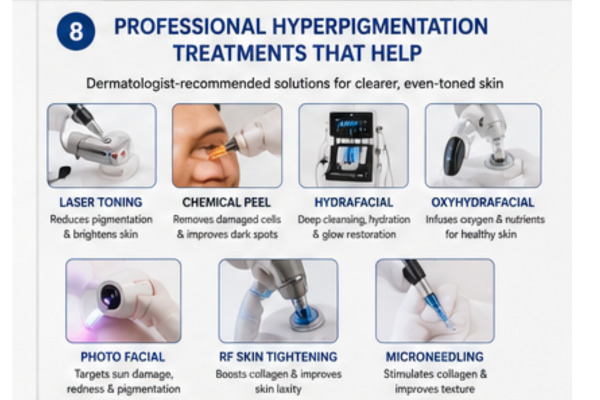
At Evenly Skin & Hair Clinic, Bangalore, depending on your skin condition, your dermatologist may recommend one or a combination of the following treatments:
Laser Toning – Helps reduce pigmentation, brighten the skin, and improve overall skin tone with minimal downtime.
Chemical Peels – Chemical peels remove damaged surface cells and help improve hyperpigmentation treatment on the face for mild to moderate pigmentation.
RF Skin Tightening – RF treatment stimulates collagen production and helps address early skin aging and mild skin laxity.
Microneedling – Microneedling supports collagen remodelling and can improve both texture and post-inflammatory pigmentation.
Which Treatment Is Best?
There isn’t one solution for that question. A treatment that works well for sun-induced pigmentation may not be the best choice for melasma or pollution-related pigmentation. That’s why an accurate diagnosis is the first step towards achieving long-lasting results.
The right treatment depends on:
The type of pigmentation
How deep the pigmentation is
Your skin type
Whether you also have acne marks, dullness, or early aging
Your lifestyle and downtime preferences
That is why a dermatologist consultation is important before starting any skin hyperpigmentation treatment.
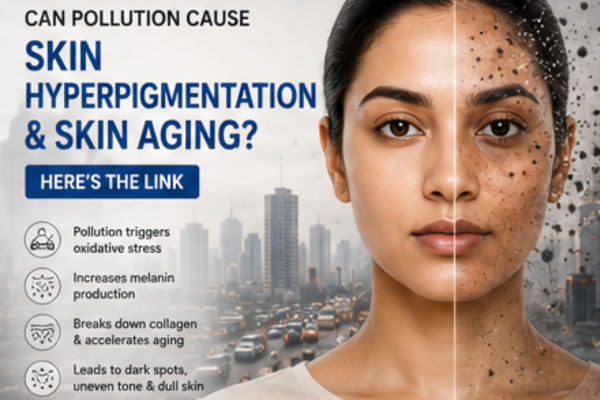
So, can pollution cause hyperpigmentation and skin aging? Absolutely. Pollution doesn’t just sit on the surface of your skin; it triggers oxidative stress, increases melanin production, weakens the skin barrier, and accelerates collagen breakdown. Over time, this can lead to dark spots, uneven skin tone, dullness, and premature aging.
With the right skincare habits, sun protection, and timely dermatologist-guided treatment, it is possible to improve skin tone, reduce pigmentation, and slow down visible skin aging.
If you’ve been struggling with stubborn pigmentation, dark spots, or early signs of skin aging despite trying different products, it may be time to understand what’s happening beneath your skin. At Evenly Skin & Hair Clinic, our experienced dermatologists offer personalised hyperpigmentation treatment in Bangalore after carefully assessing your skin type, pigmentation pattern, and lifestyle. A customised treatment plan can help you achieve healthier, clearer, and more even-toned skin with confidence.
Evenly Skin and Hair Clinic – HSR Layout
Third Floor, 815, 27th Main Rd, above Bluestone, 1st Sector, HSR Layout, Bengaluru, Karnataka 560102
Evenly Skin and Hair Clinic – Jayanagar
35, Ground Floor, Vinyas Arcade, 11th Main Rd, Vishya Bank Colony, 5th Block, Jayanagar, Bengaluru, Karnataka 560041
Third floor, Embassy Tower, 9/1/3, Mahatma Gandhi Rd, Near Treasure Island, South Tukoganj, Indore, Madhya Pradesh 452001
For health-related information, follow us on Instagram!!
Frequently Asked Questions
Can pollution really cause hyperpigmentation?
Yes. Pollution can trigger oxidative stress and inflammation in the skin, which stimulates excess melanin production. Over time, this may lead to dark spots, uneven skin tone, and skin hyperpigmentation, especially when combined with UV exposure.
I use sunscreen every day. Why am I still getting pigmentation?
Sunscreen protects your skin from UV rays, but it cannot completely protect against pollution. Factors like pollution, hormones, acne, heat, and genetics can also contribute to pigmentation. If your pigmentation keeps getting worse despite daily sunscreen use, it’s best to consult a dermatologist.
How does pollution contribute to skin aging?
Pollution generates free radicals that break down collagen and elastin, the proteins responsible for keeping your skin firm and youthful. As collagen levels decrease, you may notice fine lines, wrinkles, dullness, enlarged pores, and reduced skin elasticity.
Is hyperpigmentation caused by pollution permanent?
Not necessarily. Early pigmentation often responds well to proper skincare and dermatologist-recommended treatments. However, long-standing or deeper pigmentation may require professional skin hyperpigmentation treatment to achieve noticeable improvement.
Can pollution make existing melasma or acne marks worse?
Yes. Pollution can increase inflammation and oxidative stress, making melasma, post-acne pigmentation, and existing dark spots appear darker and take longer to fade.
How do I know if my pigmentation is caused by pollution or something else?
It isn’t always easy to tell. Pigmentation can also be caused by sun exposure, acne, hormonal changes, certain medications, or underlying medical conditions. A dermatologist can identify the exact cause and recommend the most appropriate treatment.
What foods help protect my skin from pollution?
A diet rich in antioxidants can help your skin fight free radical damage. Include foods like berries, citrus fruits, tomatoes, spinach, carrots, almonds, walnuts, and green tea, along with staying well hydrated.
We hope this information is helpful. If you have any skin and hair-related questions or would like to discuss personalized solutions, please reach out to us at 7337899030. Our team of specialists is committed to delivering personalized care tailored to your specific needs. Take the first step towards a healthier, more confident you by scheduling a consultation with us today. Your journey to vibrant skin and stronger hair begins here.
Post Views:387
Book an Appointment
Start your journey to healthy skin and hair today.










Leave a Comment