Pigmentation can affect any part of your body, including your face. If you have recently noticed that the skin around your nose looks darker or patchy, don’t panic; this is common and usually harmless. Many people, after noticing the nose pigmentation, think about why the nose is often the first area to show discoloration. But honestly, it makes sense. Because the nose is the highest and most exposed point of the face, pigmentation shows up here sooner than you expect. So, when nose pigmentation causes starts showing up, it becomes both stubborn and highly noticeable. If you want to understand what is happening beneath the skin, continue reading this blog. This gives a clear idea of how to remove pigmentation on nose, what triggers it, why it behaves differently, and which treatments truly work.
Why Does the Nose Get Pigmented Faster than the Rest of the Face?
Most people don’t know this, but the skin on the nose has a different behavior compared to the cheeks or forehead. Dermatologists often say:
“If pigmentation appears anywhere first, it’s usually the nose.” This is because:
The nose receives maximum UV radiation: Being the highest noticeable point, the sun rays directly hit this and trigger melanin formation.
The nose has more sebaceous (oil) activity: This makes the skin more sensitive to inflammation, leading to post-inflammatory darkness from acne or irritation.
The nose collects more pollutants: Dust, smoke, and airborne toxins settle easily around the nostrils.
Constant touching, rubbing, or wiping irritates the skin: This triggers pigmentation faster than you expect.
This is why pigmentation on and around the nose look darker, deeper, and more difficult to fade with home care.
Understanding Pigmentation on Nose: A Melanin Trigger Zone
Dermatologists often refer to the nose as a melanin trigger zone, a place where melanin-producing cells react more aggressively to irritation or light exposure.
Before you look for how to remove pigmentation on nose, it is essential to understand about melanin. Melanin is produced by cells called melanocytes, which get activated by UV rays, hormonal fluctuations, inflammation, repeated friction, heat, and certain medications.
When these triggers constantly act on the nose, melanin keeps building up, leading to a darker, patchy, or uneven appearance.
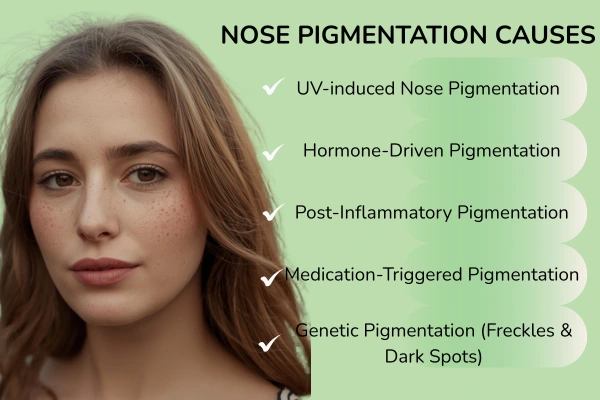
Nose Pigmentation Causes
Instead of listing just the standard causes, here are some of the dermatologist classifications:
UV-induced Pigmentation
This is one of the most common causes of nose pigmentation. Overexposure to the sunlight increases melanin production, forming:
Sunspots
Sun Tanning
Light-brown Freckles
Dark patches on the bridge of the nose
Hormone-Driven Pigmentation
Melasma often appears in a central facial pattern, making the nose one of the first and most affected areas.
It gets triggered by the hormones from pregnancy, contraceptive pills, thyroid imbalance, and PCOS.
Post-Inflammatory Pigmentation (PIH) Around the Nose
If you have ever squeezed blackheads or whiteheads, had acne, used harsh scrubs, or rubbed the nose due to allergies, the healing skin produces extra pigment, leading to stubborn pigmentation around the nose.
Medication-Triggered Pigmentation
Some medicines make the nose more sensitive to sunlight, including antibiotics, chemotherapy drugs, and hormonal imbalance medicines.
Genetic Pigmentation (Freckles & Dark Spots)
If pigmentation runs in your family, you may naturally develop tiny brown dots over the nose.
Heat & Pollution Induced Pigmentation
Urban residents, especially in Bangalore, often experience pigmentation because of constant heat and pollution exposure.
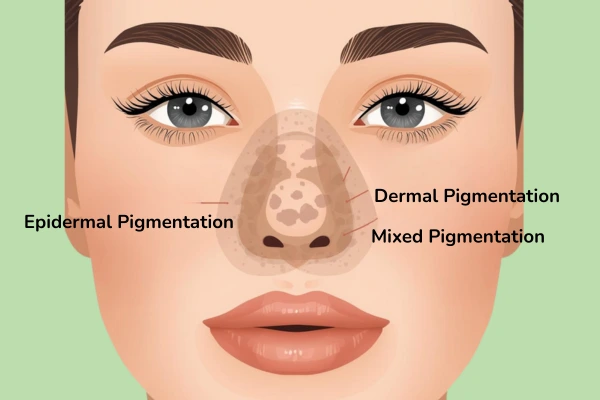
Types of Pigmentation on Nose
It is classified based on its depth and behavior.
1. Epidermal (Surface-Level) Pigmentation
Superficial
Usually brown
Responds well to topical medications & chemical peels
2. Dermal (Deep) Pigmentation
Bluish-brown or grey
Harder to treat
Needs laser toning treatment & advanced solutions
3. Mixed Pigmentation
Common in melasma
Needs combination treatment solutions
4. Vascular-Pigment Mix
Redness and pigmentation
Often mistaken for tanning
Requires specialized laser treatment
Understanding your type ensures the treatment is chosen correctly.
Why Home Remedies Barely Work for Nose Pigmentation
The nose has a thicker skin barrier and deeper pigment deposits. Natural remedies like aloe vera or turmeric can soothe inflammation, but they cannot go deep and clear the melanin accumulation, especially in the case of melasma. So, if you are relying on any masks or soap bars, it may delay proper treatment.
How to Remove Pigmentation on Nose: Dermatologist Recommendations
Here are a few highly effective, clinically proven advanced pigmentation on nose treatment solution to address nose pigmentation.
Topical Medications
Dermatologists may recommend prescription-based creams, lotions, and serums as a first line of treatment. These medications contain active ingredients like
Azelaic Acid – for acne-related pigmentation
Kojic Acid – inhibits tyrosinase
Vitamin C – brightens surface pigment
Retinoids—increase cell turnover
Niacinamide – reduces inflammation
Tranexamic Acid – excellent for melasma
These work best for mild pigmentation on the nose and early pigmentation around the nose.
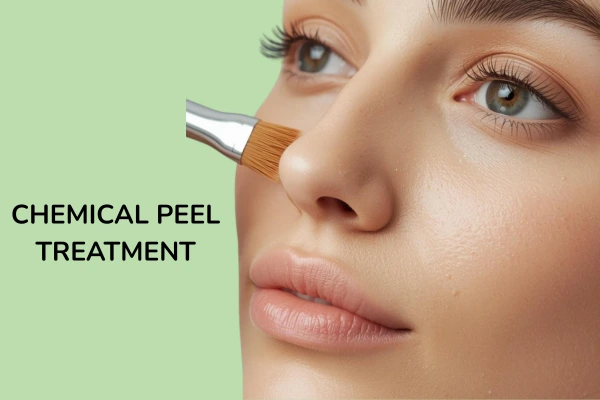
Chemical Peels—Quick Result Boosters
Chemical peels effectively address the pigmentation on the nose by exfoliating the top pigmented layers. Common peels for nose darkness are:
Glycolic Peel
Mandelic Peel (for sensitive skin)
Salicylic Peel (for acne-related PIH)
TCA Peel (for deeper pigmentation)
Peels give noticeably brighter skin in 4-6 sessions.
Laser sessions are spaced 3–4 weeks apart and are extremely effective for pigmentation on the nose caused by melasma, sun damage, and genetic freckles.
Microneedling + PRP
For stubborn PIH and textural pigmentation around the nose:
Lifestyle Modifications That Prevent the Return of Pigmentation
To maintain long-term results, dermatologists strongly recommend adopting these preventive habits:
Use broad-spectrum sunscreen daily: Especially on the bridge and tip of the nose.
Stop squeezing blackheads: It worsens PIH and inflammation.
Avoid scented creams near the nose: They irritate and darken skin.
Maintain hormone stability: If levels fluctuate frequently, melasma worsens.
Follow a gentle skincare routine: No harsh scrubs, no rubbing.
When to See a Dermatologist?
You must consult a dermatologist if:
The dark patch keeps spreading.
The nose appears gray, bluish, and ashy.
The pigmentation stays even after 2–3 months of skincare.
You suspect hormonal imbalance.
The pigmentation is uneven, textured, or patchy.
You’re unsure which treatment to choose.
Pigmentation is not dangerous, but untreated pigmentation can deepen and become resistant.
Why Choose Evenly Clinic for Your Pigmentation on Nose Treatment?
At Evenly Skin and Hair Clinic, Bangalore, we specialize in treating nasal pigmentation using dermatologist-designed protocols tailored for all Indian skin types.
Here’s how we help:
With years of experience, we study the depth of pigmentation for treating stubborn melasma and PIH.
We follow custom protocols, as different areas of the face behave differently; we target melanin precisely.
We use advanced Q-switch ND YAG laser technology for rapid pigment breakage without downtime.
We customize specially formulated chemical peels safe for sensitive skin tones.
Hormonal pigmentation management
Your nose may be small, but pigmentation in this area requires big expertise.
Pigmentation on the nose can impact confidence, but it doesn’t have to be permanent. Once you understand its causes, identify your type, and choose a targeted treatment plan, your skin tone begins to improve steadily.
With the right dermatological care, the dark patches, sun spots, and melasma-related pigmentation around the nose can significantly lighten or even completely fade.
If you’re looking for safe, effective, and long-lasting results, our dermatologists at Evenly Skin & Hair Clinic are here to guide you with an evidence-based, personalized treatment plan.
Evenly Skin and Hair Clinic – HSR Layout
Third Floor, 815, 27th Main Rd, above Bluestone, 1st Sector, HSR Layout, Bengaluru, Karnataka 560102
Evenly Skin and Hair Clinic – Jayanagar
35, Ground Floor, Vinyas Arcade, 11th Main Rd, Vishya Bank Colony, 5th Block, Jayanagar, Bengaluru, Karnataka 560041
Pigmentation on the nose is commonly caused by sun exposure, post-inflammatory hyperpigmentation, hormonal changes, melasma, allergic reactions, or friction from spectacles. The nose gets more sunlight than other facial areas, making it more prone to melanin overproduction.
Is pigmentation around the nose permanent?
Not usually. Most pigmentation around the nose fades with proper dermatological treatment, consistent sun protection, and avoiding triggers. Permanent pigmentation is rare and occurs only with long-term untreated melasma or deep dermal pigmentation.
Does sunscreen help reduce pigmentation around the nose?
Yes—sunscreen is the most important preventive and supportive treatment. UV radiation triggers melanin activity, causing pigmentation on the nose to darken. Using SPF 50 PA daily keeps existing pigmentation from worsening and prevents new patches.
Why is the nose more prone to pigmentation than the rest of the face?
The nose has high sun exposure, thinner skin on the bridge, and more sebaceous activity. These factors make it easier for melanocytes to get triggered, leading to pigmentation on the nose.
Is laser treatment safe for pigmentation around the nose?
Yes, when performed by an experienced dermatologist using the correct wavelength. Laser treatments such as Q-switched Nd:YAG are safe and specifically target excess melanin without damaging the surrounding skin.
We hope this information is helpful. If you have any skin and hair-related questions or would like to discuss personalized solutions, please reach out to us at 7337899030. Our team of specialists is committed to delivering personalized care tailored to your specific needs. Take the first step towards a healthier, more confident you by scheduling a consultation with us today. Your journey to vibrant skin and stronger hair begins here.
Post Views:3,178
Book an Appointment
Start your journey to healthy skin and hair today.









Leave a Comment