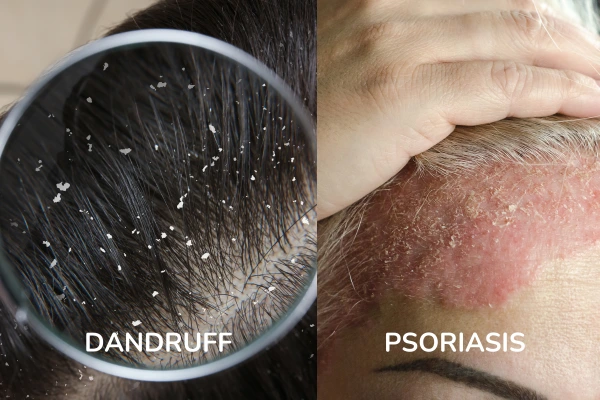
Confused by Flakes on Your Scalp? Let’s Clear the Doubt—Is It Dandruff or Something Else? Are you noticing white flakes on your shoulders, persistent itching that refuses to settle, and sometimes even increased hair fall? You may have switched shampoos or tried home remedies, yet nothing seems to help. This often leads to one common question—is this dandruff, or could it be something more serious? This confusion between dandruff vs psoriasis scalp is extremely common, even among educated people. Both conditions affect the scalp, both cause flaking, and both can impact hair health. But medically these are two different conditions and require very different treatment approaches. Treating scalp psoriasis as dandruff can worsen inflammation, while ignoring persistent dandruff can eventually damage the scalp environment and contribute to hair fall.
In this detailed guide from an experienced dermatologist at Evenly Skin & Hair Clinic, we break down psoriasis of the scalp vs. dandruff in a clear, practical, and medical yet easy-to-understand way. If you are dealing with either flakes, itching, or hair fall, this guide will help you make informed decisions.
Not all flakes indicate dandruff. The scalp reacts differently depending on oil production, immune response, and the speed of skin cell turnover. While dandruff is primarily caused by an imbalance in the scalp environment, psoriasis is a systemic autoimmune condition.
Additionally, the scalp has a unique structure with dense hair follicles, active oil glands, and a warm, humid environment. Because of this, many scalp disorders appear similar on the surface. Patients often self-diagnose based solely on flakes, but from a dermatological perspective, however, the type of flakes, degree of inflammation, skin behavior, and chronicity are far more important diagnostic indicators.
This is precisely why understanding dandruff vs. psoriasis scalp is essential before starting any treatment.
Dandruff is a common, non-contagious scalp condition caused by accelerated shedding of dead skin cells. It is not an infection, not an autoimmune disorder, and not a sign of poor hygiene.
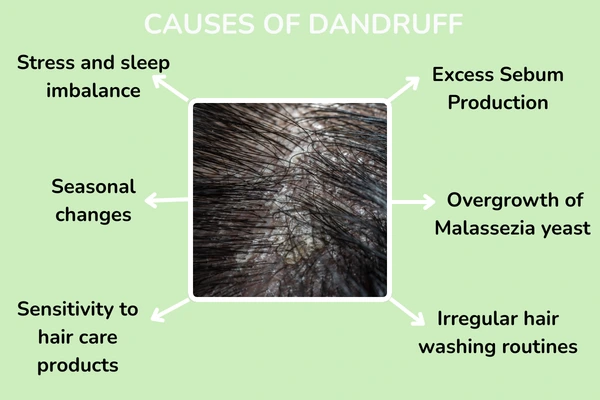
The most common dandruff causes include:
Overgrowth of Malassezia yeast on the scalp
Excess oil (sebum) production
Irregular hair washing routines
Stress and sleep imbalance
Seasonal changes
Sensitivity to hair care products
These factors disturb the scalp’s natural balance, leading to visible flakes and itching.
Dandruff is usually non-inflammatory in its early stages, which is why many people ignore it. When left untreated, it often becomes recurrent and complicated.
Does Dandruff Cause Hair Fall?
This is one of the most common concerns we hear: does dandruff cause hair fall?
Medically speaking, dandruff does not directly damage hair follicles. However, chronic or severe dandruff can indirectly lead to hair fall through:
So yes, untreated dandruff can contribute to temporary and reversible hair fall, which is why timely dandruff treatment for hair is extremely important.
What Is Scalp Psoriasis? A Chronic Autoimmune Condition
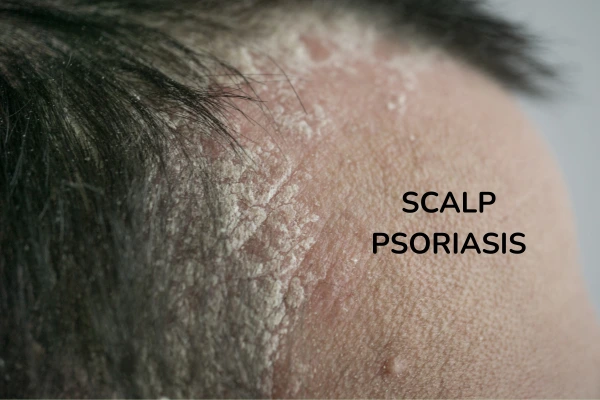
Scalp psoriasis is a chronic autoimmune inflammatory disorder, not a fungal or hygiene-related issue. In this condition, the immune system accelerates skin cell turnover, leading to thickened, inflamed plaques covered with silvery scales.
When comparing psoriasis of the scalp vs dandruff, this immune involvement is the single biggest difference.
Why Does Scalp Psoriasis Occur?
Strong genetic predisposition
Immune system dysregulation
Triggers such as stress, infection, or skin injury
Association with psoriasis on other body parts
Scalp psoriasis is a lifelong, relapsing condition, meaning symptoms may improve and recur over time.
Key Clinical Signs of Scalp Psoriasis
Thick, silvery-white scales
Well-defined red or inflamed plaques
Intense itching, burning, or soreness
Flakes that stick to the scalp and don’t fall easily
Bleeding when scales are forcibly removed
Extension beyond hairline (ears, nape of neck, forehead)
These signs clearly differentiate dandruff vs psoriasis scalp during a clinical examination.
Dandruff vs. Psoriasis Scalp
Rather than repeating standard tables, let’s look at how patients usually notice the difference:
Flake Behavior: Dandruff flakes fall off on clothes; psoriasis flakes remain stuck.
Understanding these differences prevents the use of wrong products and delayed treatments.
Why Anti-Dandruff Shampoos Fail in Psoriasis
Scalp psoriasis patients often assume anti-dandruff shampoos with zinc pyrithione or ketoconazole are suitable, when this is not always the case. While these target dandruff causes, they do not address immune-mediated inflammation.
In psoriasis, inappropriate shampoo use can:
Increase scalp dryness
Worsen scaling
Trigger flare-ups
Evenly Clinic Dandruff Treatment for Hair
At Evenly Skin & Hair Clinic, our dandruff treatment is designed to restore long-term scalp health rather than provide short-lived relief. Our goals are to control flakes, reduce itching, restore scalp health, and prevent dandruff-related hair fall.
Medical-Grade Dandruff Treatment for Hair
Anti-Dandruff Medicated Shampoos
Based on your scalp type and dandruff severity, we prescribe clinically proven shampoos containing:
Zinc pyrithione (to reduce flaking and oil imbalance)
Selenium sulfide (for recurrent dandruff cases)
These shampoos are advised with proper frequency and contact time, which plays a crucial role in treatment success.
Professional Scalp Clean-Up Treatment
For patients with heavy flakes, oil buildup, or product residue, we recommend a dermatologist-supervised scalp cleanup. This procedure:
Gently removes adherent dandruff flakes
Unclogs blocked hair follicles
Promotes healthy scalp oxygen levels
Enhances the effectiveness of shampoos
Dandruff Treatment for Hair Fall Control
When dandruff is associated with hair shedding, the first step is calming scalp inflammation. Once the scalp environment normalizes, dandruff-related hair fall reduces naturally.
How Scalp Psoriasis Is Treated
Scalp psoriasis treatment requires immune modulation and inflammation control:
Topical corticosteroids
Coal tar formulations
Non-irritating scalp care protocols
Advanced treatments
This medical distinction between psoriasis of the scalp vs dandruff is critical for long-term control.
Can Both Conditions Exist Together?
Yes. Some patients develop sebopsoriasis, a condition showing features of both dandruff and psoriasis. This overlap often delays diagnosis and leads to improper treatment.
Only a trained dermatologist can accurately identify this condition and plan appropriate therapy.
Lifestyle Changes That Support Scalp Healing
Regardless of diagnosis, these habits support scalp health:
Avoid harsh or heavily fragranced shampoos
Do not scratch or forcibly remove flakes
Actively manage stress levels
Cleanse the scalp regularly and gently
Avoid self-medication
These measures help improve treatment results
When Should You See a Dermatologist?
You should consult a dermatologist if:
Flakes persist beyond 2–3 weeks
Severe itching or redness occurs
Hair fall increases
Scales spread beyond scalp
Over-the-counter dandruff treatment fails
Early diagnosis prevents complications, long-term scalp damage, and unnecessary hair loss.
Understanding dandruff vs psoriasis scalp is not about labeling. It’s about choosing the right treatment and protecting long-term scalp and hair health. While dandruff is common, manageable, and often temporary, scalp psoriasis requires medical care and long-term monitoring.
If you’re struggling with persistent flakes, itching, or hair fall and feel confused despite trying multiple products, it’s time to stop guessing. At Evenly Skin & Hair Clinic, dermatologist-led diagnosis ensures targeted treatment, not trial-and-error solutions.
Evenly Skin and Hair Clinic – HSR Layout
Third Floor, 815, 27th Main Rd, above Bluestone, 1st Sector, HSR Layout, Bengaluru, Karnataka 560102
Evenly Skin and Hair Clinic – Jayanagar
35, Ground Floor, Vinyas Arcade, 11th Main Rd, Vishya Bank Colony, 5th Block, Jayanagar, Bengaluru, Karnataka 560041
How can I tell if I have dandruff or scalp psoriasis on my own?
It is not possible to differentiate dandruff from scalp psoriasis without a clear examination. Dandruff presents as loose, oily flakes with mild itching, whereas scalp psoriasis causes thick, adherent scales, redness, and sometimes bleeding. Both look similar in the early stage.
Can dandruff turn into scalp psoriasis if left untreated?
No. Dandruff does not turn into psoriasis. The two conditions are not the same.
Does scalp psoriasis cause hair fall?
Scalp psoriasis does not permanently damage hair follicles, but active inflammation, scratching, and thick scale buildup can cause temporary hair shedding.
Can dandruff and scalp psoriasis occur together?
Yes. Some individuals develop sebopsoriasis, a condition with features of both dandruff and psoriasis. This overlap is difficult to identify without dermatological expertise.
Is scalp psoriasis contagious?
No. Scalp psoriasis is not contagious. It cannot spread through touch, shared combs, or hair products. This is an immune-related condition and not caused by infection.
Is dandruff a sign of poor hygiene?
No!! Dandruff is not caused by poor hygiene. In fact, over-washing or using harsh shampoos can worsen dandruff by disrupting the scalp’s natural barrier.
Is long-term treatment required for scalp psoriasis?
Yes. Scalp psoriasis is a chronic condition with periods of remission and flare-ups. While it cannot be cured permanently, proper medical treatment can keep symptoms well controlled for long durations.
We hope this information is helpful. If you have any skin and hair-related questions or would like to discuss personalized solutions, please reach out to us at 7337899030. Our team of specialists is committed to delivering personalized care tailored to your specific needs. Take the first step towards a healthier, more confident you by scheduling a consultation with us today. Your journey to vibrant skin and stronger hair begins here.
Post Views:445
Book an Appointment
Start your journey to healthy skin and hair today.








Leave a Comment