Have you noticed a scar that keeps growing thicker instead of fading away? For many people, that scar turns into a keloid—a raised, firm scar that extends beyond the original wound. What makes keloids particularly frustrating is that they don’t shrink on their own. In fact, some may continue to grow slowly over time. Keloid scars are not ordinary scars; they form when the skin produces excess collagen during wound healing, creating thick scar tissue that extends beyond the original injury. As a result, treating them usually requires advanced dermatological procedures rather than topical creams. Today, two of the most widely recommended treatments include steroids injections for keloids and laser therapy for keloid scars. Both approaches are used by dermatologists worldwide. However, patients often confuse which treatment is due, do cortisone injections permanently remove keloids, are there any side effects, and many others. This comprehensive blog explains all your questions.
When skin is injured, the body naturally produces collagen to repair the tissue. However, in some individuals, the healing response becomes overactive. Instead of slowing down once healing occurs, collagen production continues.
As a result, the scar grows thicker, firmer, and sometimes larger than the original wound.
Keloids can appear anywhere on the body. However, they are most commonly seen on:
Chest
Shoulders
Jawline
Earlobes
Upper back
Because the underlying issue is excess collagen formation, treatments like steroids injections for keloids and laser therapy for keloid scars aim to control collagen production and improve the scar’s appearance.
Steroids Injections for Keloids: What Happens During the Treatment
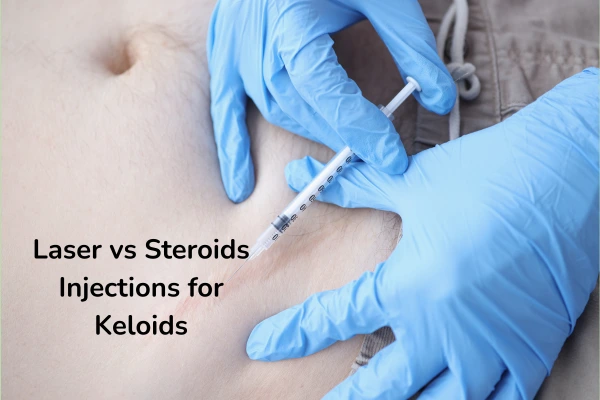
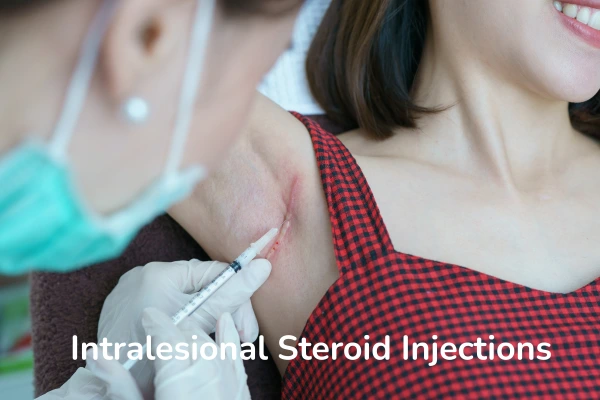
Dermatologists commonly use intralesional corticosteroid injections, also known as cortisone for keloids, to reduce scar thickness.
In this procedure, the dermatologist injects a small amount of corticosteroid medication directly into the keloid tissue.
Because the injection is delivered directly into the scar, the medication acts precisely at the site where excessive collagen is forming. Most patients require multiple treatment sessions spaced a few weeks apart. Over time, the keloid becomes less prominent and softer in texture.
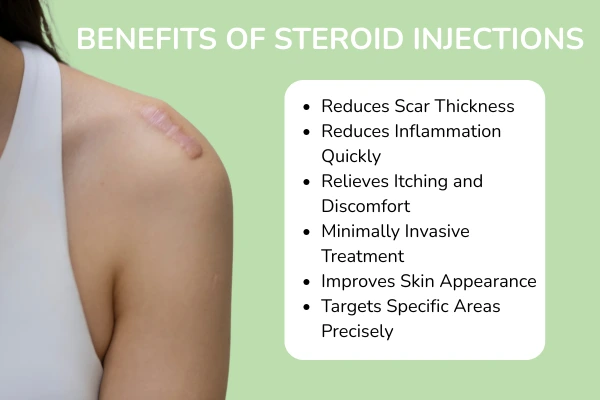
Benefits of Steroids Injections for Keloids
One of the main reasons dermatologists recommend steroids injections for keloids is their ability to shrink raised scars effectively.
Relieves Symptoms: Many keloids cause itching or tenderness. Steroids reduce these symptoms.
Non-Surgical Treatment: Unlike surgery, injections do not involve incisions or stitches.
Quick Procedure: Each session usually takes only a few minutes.
Cost-Effective: Compared with laser procedures, injections are generally more affordable.
Suitable for Multiple Body Areas: Steroids injections are commonly used for keloids on the chest, shoulders, jawline, and earlobes.
However, although cortisone for keloids can significantly improve the appearance of scars, it may not always remove them completely.
Possible Side Effects of Cortisone for Keloids
Some of the side effects of steroids injections for keloids are:
Skin thinning
Lightening of surrounding skin
Small blood vessel visibility
Temporary tenderness
However, when performed by an experienced dermatologist, the risk of complications is minimal.
What Is Laser Therapy for Keloid Scars? How it Improves Scar Appearance
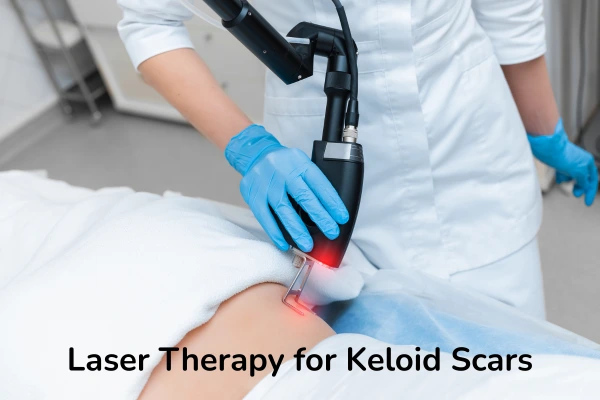
Laser therapy for keloid scars can be used either alone or combined with injections.
In this treatment, dermatologists use specialized lasers like fractional CO₂ lasers and Erbium YAG lasers to target scar tissue and improve skin texture.
These lasers work by delivering controlled energy into the scar tissue, which stimulates skin remodeling.
How Laser Therapy Helps Reduce Keloids
Unlike injections, laser therapy for keloid scars focuses on improving both the appearance and texture of the scar.
The treatment works through several mechanisms:
It breaks down excess scar tissue.
It stimulates new collagen remodeling.
It reduces redness in the scar.
It improves overall skin texture.
Gradually, the keloid starts to flatten, become smoother, and appear less noticeable.
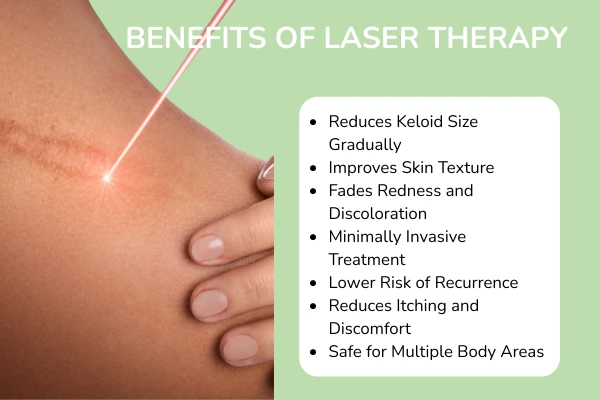
Benefits of Laser Therapy for Keloid Scar Treatment
Here are some of the must-know benefits of laser therapy for keloid scars:
While complete removal may not always be possible, both laser therapy and steroid injections for keloid scars can significantly improve their appearance.
Patients typically notice:
Reduced scar thickness
Improved skin texture
Less redness
Relief from itching
Visible improvements usually appear after several treatment sessions.
Who Can Benefit Most from These Treatments?
Both laser therapy for keloid scars and steroid injections for keloids can benefit patients who have:
Raised or thick scars
Persistent itching in scars
Cosmetic concerns about keloids
Previous scars that did not respond to creams
However, treatment choice always depends on scar size, location, and skin type.
Therefore, consulting a dermatologist is essential.
Dermatologist’s Perspective: Choosing the Right Treatment
From a clinical perspective, dermatologists rarely rely on a single treatment method for keloids.
Instead, they evaluate several factors:
Scar thickness
Duration of the scar
Patient skin type
Previous treatments
Risk of recurrence
Based on this assessment, the dermatologist may recommend steroid injections, laser therapy, or a combination of both.
This customized approach ensures the safest and most effective results.
Preventing Keloid Recurrence After Treatment
Keloids are known for their tendency to return. Therefore, dermatologists often recommend preventive care after treatment.
If you notice a scar becoming raised, thick, or itchy, it is best to seek professional advice early.
Early treatment can:
Prevent the keloid from growing larger
Reduce treatment time
Improve cosmetic outcomes
Dermatologists can evaluate the scar and recommend the most suitable option between laser therapy and steroid injections for keloid scars.
Which Treatment Works Better?
There is no single answer to the question of laser vs. steroid injections for keloids. Both treatments play an important role in modern dermatology.
Steroid injections are excellent for reducing scar thickness and controlling inflammation, while laser therapy helps improve skin texture and overall appearance.
However, in many cases, the best results come from combining both treatments under the supervision of an experienced dermatologist.
Yes, steroid injections for keloids are one of the most commonly recommended treatments by dermatologists. These injections reduce inflammation inside the scar tissue and slow down excess collagen production.
How many sessions of cortisone injections are required for keloids?
Most patients require 3 to 6 sessions of cortisone for keloids, depending on the size and thickness of the scar. These sessions are usually spaced 4 to 6 weeks apart to allow the medication to gradually soften and flatten the scar tissue.
Can laser therapy completely remove keloid scars?
Laser therapy for keloid scars may not completely remove the scar, but it can significantly reduce its appearance. It improves the scar’s texture, reduces redness, and helps the skin look more even.
Are steroid injections for keloids painful?
Most patients experience only mild discomfort during steroid injections for keloids. Dermatologists usually apply a numbing cream before the procedure to minimize pain, making the treatment quick and tolerable.
Can keloids return after treatment?
Keloids can sometimes recur because the condition involves an overactive healing response. However, combining treatments such as cortisone for keloids and laser therapy for keloid scars significantly reduces the chances of recurrence.
We hope this information is helpful. If you have any skin and hair-related questions or would like to discuss personalized solutions, please reach out to us at 7337899030. Our team of specialists is committed to delivering personalized care tailored to your specific needs. Take the first step towards a healthier, more confident you by scheduling a consultation with us today. Your journey to vibrant skin and stronger hair begins here.
Post Views:25
Book an Appointment
Start your journey to healthy skin and hair today.







Leave a Comment