Most people know one thing about pimples/acne—if someone says that there is acne on their face, the common answer would be “use salicylic acid for pimples.” But very few actually understand how salicylic acid for pimples works, how much to use, when to stop, and whether it is truly suitable for their skin type. That is exactly why so many patients either overuse it, underuse it, or quit too early.
In fact, salicylic acid for acne is one of the most recommended dermatological ingredients worldwide. But using it incorrectly can lead to irritation, dryness, and even worsening breakouts. Therefore, knowing the science behind salicylic acid acne treatment is just as important as applying it.
In this comprehensive guide, I will explain to you how salicylic acid for pimples works at a cellular level, how to apply it, its benefits, its side effects, and when to consider professional salicylic acid pimple treatment.
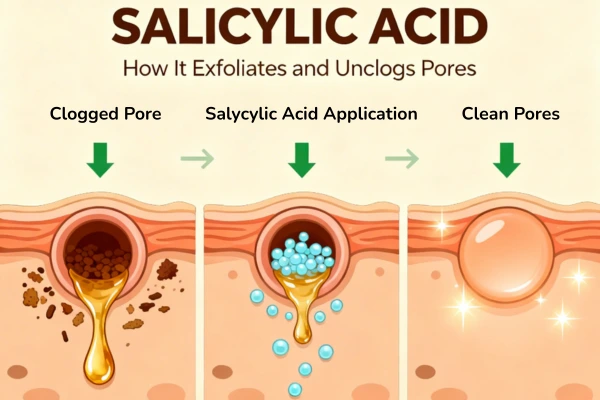
Now, here’s where salicylic acid for acne becomes relevant. Unlike many topical agents that only dry the surface, salicylic acid penetrates deep inside pores. Because it is oil-soluble, it breaks down sebum and dissolves debris trapped inside hair follicles.
As a result, salicylic acid acne treatment directly targets clogged pores, making it highly effective for blackheads, whiteheads, and mild inflammatory acne.
What Is Salicylic Acid?
Salicylic acid is a naturally derived beta-hydroxy acid (BHA) extracted from willow bark. Dermatologically, it is classified as a keratolytic agent, meaning it exfoliates the skin by dissolving intercellular bonds between dead skin cells.
Therefore, when we use salicylic acid for pimples, it:
Penetrate deep inside oily pores.
Reduces (Sebum) oil buildup
Breaks down dead skin cells
Minimizes inflammation
Reduce pore blockage
Prevents new acne formation
Because of these mechanisms, salicylic acid and acne treatment go hand in hand in clinical dermatology.
In simple words—salicylic acid works inside the pore, not just on the surface.
Is Salicylic Acid Good for Pimples?
Yes—especially for:
Non-inflammatory comedonal acne such as blackheads and whiteheads
Mild inflammatory acne
Oily and acne-prone skin
Early-stage breakouts
Salicylic acid for pimples works by gently exfoliating the pore lining and reducing oil accumulation. Over time, it prevents micro-comedone formation—which is the earliest stage of acne.
However, salicylic acid acne treatment may not be sufficient for:
Keratolytic Action: It loosens the bonds between dead skin cells and clears clogged follicles.
Sebum Regulation: Since it dissolves oil, it reduces excessive sebum accumulation, a major acne trigger.
Anti-Inflammatory Effect: Salicylic acid reduces redness and swelling in inflamed acne.
Comedolytic Activity: It prevents the formation of new blackheads and whiteheads.
Because of these actions, salicylic acid acne treatment is considered first-line treatment for comedonal acne.
Does Salicylic Acid Remove Acne Permanently?
Salicylic acid controls acne effectively, but since acne is influenced by hormones and genetics, maintenance therapy is usually required.
What it does do effectively is
Control breakouts
Minimises the chances of future breakouts
Maintain clearer skin with regular use
So, does salicylic acid remove acne?
Yes—it clears active lesions. Manages and controls it effectively when guided by a dermatologist.
No—it is not a permanent cure for all types of acne.
That said, consistent salicylic acid pimple treatment significantly reduces breakouts and prevents recurrence when used as part of a long-term skincare plan.
20%–30%: Professional chemical peels (dermatologist administered)
If you are a beginner, start with the lower concentrations of salicylic acid for pimples to avoid irritation. Using higher concentrations can irritate your skin barrier.
Step 2: Start Slowly
Start by applying it 2–3 times a week, then gradually increase the frequency depending on your skin’s tolerance.
Step 3: Cleanse Properly
or full-face use:
Apply a thin layer after cleansing.
Avoid eye area
For spot treatment:
Apply salicylic acid on the pimple directly.
Use once daily initially.
Do not layer multiple strong actives at once.
Step 4: Moisturize & Protect
Salicylic acid for pimples or acne can cause dryness, so always follow with:
Non-comedogenic moisturizer
Broad-spectrum sunscreen
Sun protection is essential because exfoliated skin becomes photosensitive. Skipping sunscreen can worsen pigmentation.
Benefits of Salicylic Acid for Pimples
Let’s summarize the dermatological benefits:
Deep pore exfoliation
Controls oil production
Reduced inflammation
Prevention of blackheads or any breakouts
Prevents future breakouts
Improved skin texture
Reduced post-acne pigmentation (mild cases)
Recommended Dosage of Salicylic Acid for Pimples
Formulation
Concentration
Frequency
Cleanser
0.5-2%
Once or twice daily
Serum
1-2%
Once daily
Spot Treatment
2%
Once daily
Chemical Peel
20-30%
In clinic only
It is always recommended to consult a dermatologist for chemical peel acne treatment.
Possible Side Effects of Salicylic Acid Acne Treatment
Although salicylic acid for pimples is generally safe, side effects may include:
Dryness
Mild peeling
Redness
Mild burning sensation
Temporary purging
Rarely: Allergic reactions and severe irritation in sensitive skin
If irritation persists, discontinue use immediately and consult an experienced dermatologist.
Who Should Avoid Salicylic Acid?
Avoid salicylic acid for acne if you:
Have an aspirin allergy
Have extremely dry or eczema-prone skin
If you are pregnant or breastfeeding (consult a dermatologist before use)
Are using strong prescription retinoids
Although salicylic acid for acne is safe in low concentrations, professional consultation ensures better results.
Salicylic Acid vs. Benzoyl Peroxide—Which Is Better for Acne?
Salicylic acid works by unclogging pores and controlling oil, making it ideal for blackheads and whiteheads. Benzoyl peroxide, on the other hand, primarily kills acne-causing bacteria and is more effective for inflamed red pimples.
For comedonal acne, salicylic acid is preferred.
For inflammatory acne—Benzoyl peroxide may work better.
In many cases, dermatologists combine both strategically for optimal acne control.
How Long Does Salicylic Acid Take to Show Results?
Most patients notice improvement in:
1–2 weeks (reduced oiliness)
3–4 weeks (fewer new breakouts)
6–8 weeks (visible skin clarity)
Consistency is key when using salicylic acid for pimples.
Professional Salicylic Acid Pimple Treatment in Clinic
At Evenly Clinic, our dermatologists often use controlled salicylic acid chemical peels for persistent acne, oily skin, acne marks, and uneven texture. They help:
We have a variety of peels, such as glycolic peel, TCA peel, mandelic peel, yellow peel, and many others.
Common Mistakes While Using Salicylic Acid for Acne
Many people unknowingly damage their skin by:
Using high concentration daily
Skipping moisturizer
Mixing with multiple acids
Expecting overnight results
Starting with a mild quantity and consulting a dermatologist for the right usage helps to yield safer and better outcomes from the salicylic acid acne treatment.
Is Salicylic Acid Good for Acne in All Skin Types?
Salicylic acid for pimples works best for:
Oily skin
Combination skin
Acne-prone teenagers
Adult hormonal acne (mild cases)
However, dry skin patients require lower strength and less frequent application.
Why Salicylic Acid Works Well in Bangalore’s Climate
Bangalore’s humid afternoons, pollution exposure, and long hours in air-conditioned offices contribute to excess oil production and clogged pores. Salicylic acid helps dissolve oil buildup caused by sweat, pollution, and urban lifestyle factors.
However, due to fluctuating weather conditions in Bangalore, barrier protection and proper moisturization are equally important when using exfoliating acids.
When Should You See a Dermatologist?
If you experience:
Persistent cystic acne
Severe pigmentation
Painful nodules
No improvement after 6 weeks
Then relying solely on salicylic acid for acne may not be sufficient. A customized acne management plan becomes essential.
At Evenly Clinic, our dermatologists evaluate acne grade, skin sensitivity, hormonal triggers, and lifestyle factors before recommending salicylic acid acne treatment or advanced procedures.
Should You Use Salicylic Acid for Pimples?
Salicylic acid for pimples remains one of the most scientifically proven ingredients in dermatology. It unclogs pores, reduces oil, controls inflammation, and prevents blackheads effectively. However, its success depends on correct usage, appropriate concentration, and skin type compatibility.
Struggling with Persistent Acne?
If your acne keeps recurring despite over-the-counter products, it may require medical evaluation. At Evenly Clinic, we assess acne severity, hormonal triggers, pigmentation risk, and skin sensitivity before designing a customized acne treatment plan.
Whether you need topical therapy, salicylic acid chemical peels, oral medications, or advanced procedures, early intervention prevents scarring and long-term pigmentation.
Book a consultation and treat acne scientifically, not experimentally.
Evenly Skin and Hair Clinic – HSR Layout
Third Floor, 815, 27th Main Rd, above Bluestone, 1st Sector, HSR Layout, Bengaluru, Karnataka 560102
Evenly Skin and Hair Clinic – Jayanagar
35, Ground Floor, Vinyas Arcade, 11th Main Rd, Vishya Bank Colony, 5th Block, Jayanagar, Bengaluru, Karnataka 560041
Yes, it is effective for treating blackheads, whiteheads, and mild inflammatory acne. It works by penetrating deep into pores, dissolving excess oil, and exfoliating dead skin cells that cause clogging.
Can I use salicylic acid every day?
Yes, lower concentrations can be used daily if your skin tolerates it well. Beginners should start 2-3 times per week and increase gradually to avoid irritation.
Can salicylic acid cause purging?
Yes, temporary purging may occur when starting salicylic acid. This happens because it speeds up skin cell turnover and brings clogged pores to the surface. Purging usually settles within 2-4 weeks.
Can salicylic acid be used on sensitive skin?
It can be used in lower concentrations. But individuals with very dry, eczema-prone skin or extremely sensitive skin should consult a dermatologist.
Does salicylic acid help with acne marks?
Salicylic acid helps reduce mild post-acne pigmentation by promoting gentle exfoliation. However, deeper acne scars may require treatments like chemical peels, microneedling, or laser procedures.
Is salicylic acid better than benzoyl peroxide?
Salicylic acid is better for blackheads and whiteheads because it unclogs pores. Benzoyl peroxide is more effective for inflamed, red acne because it kills acne-causing bacteria. Dermatologists often combine both for better results.
We hope this information is helpful. If you have any skin and hair-related questions or would like to discuss personalized solutions, please reach out to us at 7337899030. Our team of specialists is committed to delivering personalized care tailored to your specific needs. Take the first step towards a healthier, more confident you by scheduling a consultation with us today. Your journey to vibrant skin and stronger hair begins here.
Post Views:1,993
Book an Appointment
Start your journey to healthy skin and hair today.





Leave a Comment