If you have recently noticed stretch marks on your thighs, buttocks, or hips, you are not alone, and you are definitely not “late” in treating them. Whether you are a new mom, a fitness enthusiast, a teenager going through a growth spurt, or even someone who simply gained or lost weight quickly, these sudden lines can feel frustrating.
Some people see red stretch marks on thighs, others notice dark stretch marks on hips, and some will be thinking, “Why do I have stretch marks on my butt even though I’m not overweight?” ”
At Evenly Skin & Hair Clinic in Bangalore, we hear this every single day. And the truth is simple: Stretch marks are extremely common, and with the right dermatological treatments, you can reduce them significantly and much faster than you think.
But to treat them correctly, you first need to understand how they form, why certain areas like the thighs, buttocks, and hips are more prone, and what works best for each type. Let’s break down everything clearly.
What Exactly Are Stretch Marks on Thighs, Buttocks & Hips?
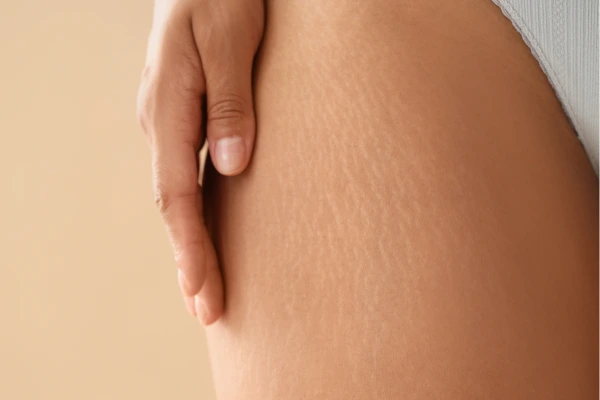
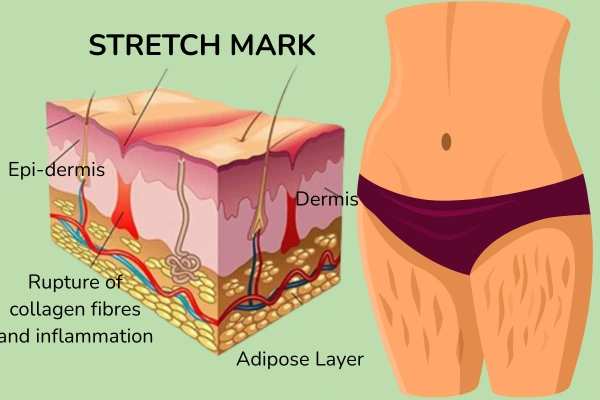
Stretch marks, medically known as striae distensae, form when your skin stretches faster than your collagen buildup. This sudden stretch causes tiny tears inside the dermis, breaking the collagen and elastin fibers and forming lines on the surface. Dermatologists classify them into two types:
Striae Rubrae (Red Stretch Marks)
Fresh stretch marks that look red, purple, pink, or inflamed. These stretch marks appear on inner thighs.
Striae Albae (White Stretch Marks)
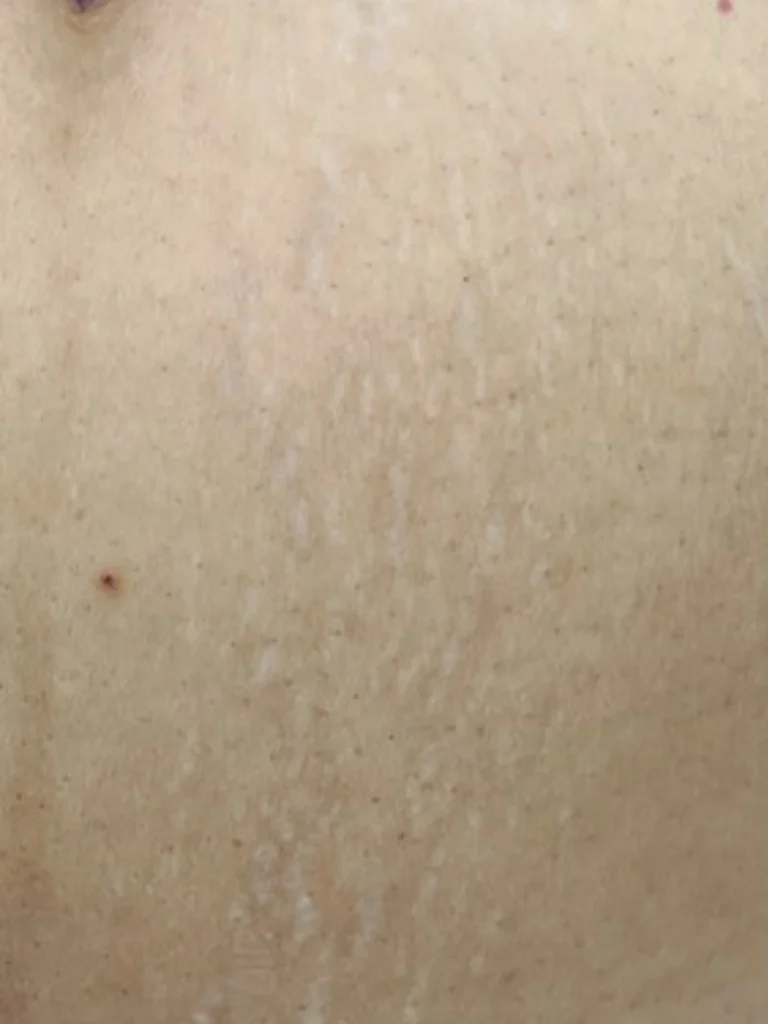
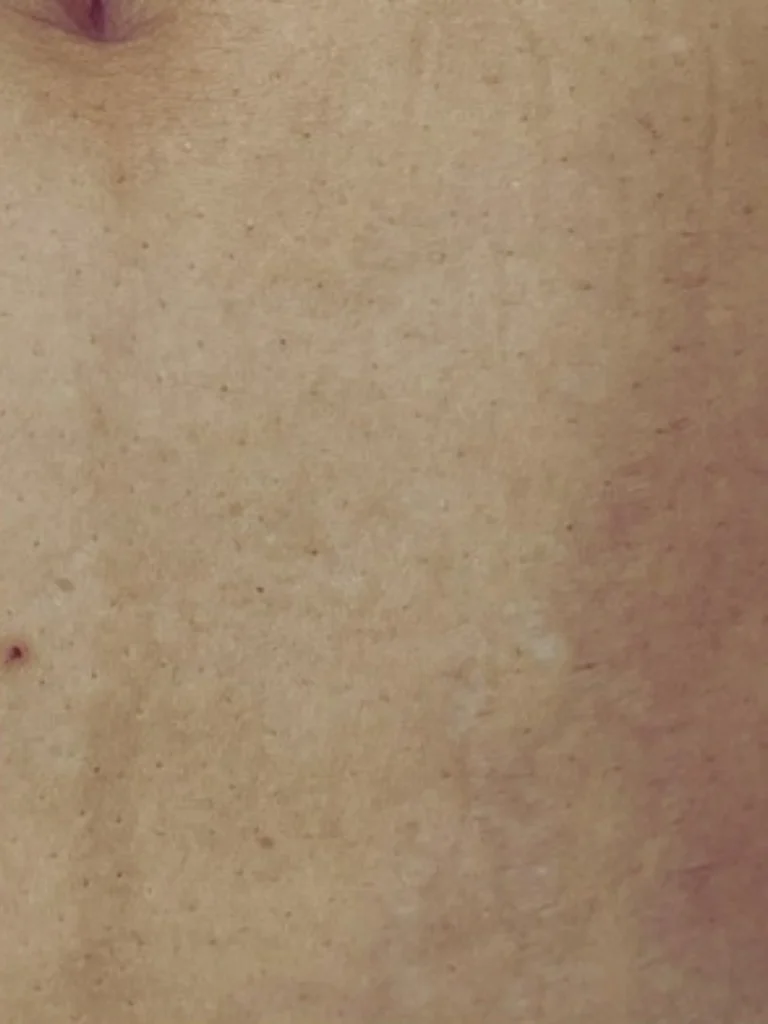
Older stretch marks that appear white or skin-colored.
So yes, stretch marks are completely normal. But they are also treatable.
What Causes Stretch Marks on Thighs, Buttocks & Hips?
Many people think stretch marks are formed only due to pregnancy and weight gain, but there are many other causes, explained by a dermatologist. Continue reading to know the causes and why certain patterns appear in specific places like thighs, hips, buttocks, or back legs.
Sudden Weight Gain or Fat Accumulation: The thighs, buttocks, and hips store fat first, especially in women. This rapid expansion causes stretch marks on thighs, buttocks, and hips. Even a small increase in body fat can trigger collagen tearing.
Rapid Fat Loss: Losing fat quickly can also cause stretch marks because the skin cannot shrink at the same speed.
Puberty and Growth Spurts: During puberty, growth is explosive, especially in girls. The bones start lengthening, hips widen, thighs grow, and muscles develop faster than skin elasticity.
Hormonal Fluctuations: Hormones like cortisol weaken collagen and elastin, enabling tearing. High cortisol levels may lead to dark stretch marks on hips and wider stretch marks on buttocks and upper thighs. Conditions like Cushing’s syndrome or long-term steroid use may worsen stretch marks.
Bodybuilding & Muscle Growth: If you lift weights, do squats, or train intensively, your thigh and glute muscles grow rapidly. This creates stretch marks on men’s buttocks and stretch marks on bum male, especially around the hip joints.
Pregnancy: Women often develop pregnancy stretch marks on buttocks, thighs, and hips due to rapid weight changes and hormonal shifts.
Genetics: If your family members have stretch marks, the chances are higher that your skin will develop them too.
Thin or Dehydrated Skin: Low collagen density makes skin prone to tearing. Poor hydration or long-term dryness makes stretch marks on the front of thighs and on the side of hips more visible.
Dry Skin and Poor Skin Barrier: Bangalore’s air-conditioned indoor environments, combined with borewell water, make your skin dry. Dry skin can easily tear and is prone to stretch marks.
Stretch marks differ based on color, stage, and thickness. Identifying them helps you choose the right treatment.
Red or Pink Marks: These are new, active, and respond fastest to treatment.
Purple or Dark Stretch Marks: These are mainly combined with melanin production during inflammation.
White or Silvery Stretch Marks: Older, matured marks that require deeper collagen treatments like MNRF or fractional lasers.
Wide, Deep Stretch Marks on Buttocks and Hips: These often form due to rapid muscle gain or fat accumulation.
Can stretch marks go away on their own?
No cream or home remedy can erase stretch marks on thighs, buttocks, or hips. But medical treatments can reduce them by 60-70%, depending on the severity. The earlier you treat red or new marks, the faster they improve.
How to Remove Stretch Marks on Thighs, Buttocks, or Hips?
This section covers only scientifically backed treatments that address stretch marks on thighs, buttocks, and hips. Based on the severity and color of your stretch marks, dermatologists usually recommend one or a combination of the following treatments.
Fractional CO2 laser treatment
Laser is the most effective method to treat stretch marks on thighs, buttocks, dark stretch marks on hips, stretch marks on hips, and stretch marks on buttocks (male).
How it works:
Laser beams (fractional CO₂ laser) create controlled micro-injuries and boost collagen production and smooth texture and fade color.
Results:
30–40% improvement in 1 month
60–80% improvement in 3–4 sessions
Excellent for both new and old stretch marks
Why it works so well on thigh & buttocks stretch marks
These areas have thick skin, so laser energy penetrates deeply into the skin and remodels skin for faster collagen production.
Microneedling Radio Frequency – Best for Deep, Old, Thick Stretch Marks
This advanced skin treatment is perfect to address white stretch marks and stretch marks on thighs and buttocks. Irrespective of the site on the thigh it works well.
How MNRF Works:
MNRF treatment uses micro needles and radiofrequency to rebuild collagen deeper than normal treatments.
Results:
Smoother texture, tighter skin, significant reduction in stretch mark width.
Dermatologist-Recommended Chemical Peels (TCA or Retinoid Peels)
In some mild cases, even the stronger chemical peels may also work. These peels exfoliate, fade discoloration, and stimulate new skin formation. These peels are perfect for surface-level marks or pigmented stretch marks. When combined with laser treatments, it speeds up the results dramatically.
How many sessions are needed to get rid of stretch marks (mild to deeper ones)?
Mild stretch marks usually take 3-4 sessions to fade.
Moderate sessions take 6-8 sessions to fade
Severe or older stretch marks required 8-10 sessions.
This time frame totally depends on the severity and the type of the treatment done.
Home care tips that support
These home care tips do not remove stretch marks, but they support and maintain skin health:
Hyaluronic acid body lotions
Retinoid creams (prescribed only)
Vitamin C serums
Omega-3–rich foods
Keeping yourself hydrated
Avoiding sudden weight gain
Bangalore-Specific Factors That Make Stretch Marks More Common
Apart from biological factors, certain lifestyle patterns common in Bangalore also make stretch marks more visible.
Sedentary IT Jobs: Long hours of sitting lead to fat accumulation in thighs, buttocks & hips.
High Stress Levels: Long-time stress releases cortisol and weakens collagen, leading to stretch marks.
Hard Water & AC Exposure: Dry skin cracks faster and stretches poorly.
PCOS & Hormonal Imbalances Among Women: Hormonal disruptions lead to rapid fat distribution on hips & thighs.
This is exactly why Bangalore residents often see stretch marks on thighs, stretch marks on buttocks, and hip stretch marks, even without major weight changes.
Why Choose Evenly Skin and Hair Clinic for Stretch Mark Removal?
At Evenly, we use dermatologist-guided protocols customized for all skin types, as melanin-rich skin can darken with incorrect treatments.
What makes our approach unique?
State-of-the-art lasers certified by the USFDA
Minimal downtime protocols
Combinational therapies for faster results
Monitoring by experienced dermatologists
Tailored plans based on your skin type and stretch mark stage.
Whether you have stretch marks on thighs, stretch marks on buttocks, or stretch marks on hips, you don’t have to live with them forever. You don’t need to hide them under long clothes. You don’t need to feel embarrassed or frustrated. With advanced dermatological treatments available across all our centers, you can reduce them dramatically and regain smooth, even skin.
Why do I have stretch marks on my hips and buttocks?
Stretch marks on the hips and buttocks usually happen when the skin expands faster than it can stretch. This is common during weight gain, puberty, growth spurts, pregnancy, muscle building, and hormonal imbalance.
Are stretch marks on the bum normal for men?
Yes. Stretch marks on the buttocks in men are extremely common. Men usually get stretch marks on the bum, upper thighs, and side of hips.
Do stretch marks on thighs go away naturally?
They may lighten over time but don’t fully disappear on their own. Red stretch marks can fade to white, but texture irregularities remain.
How long does it usually take for stretch mark removal results to appear?
Treatment results depend on the age of the stretch marks, the depth of the marks, the skin type, and the treatment method.
How to remove pregnancy stretch marks on buttocks?
Pregnancy stretch marks require targeted treatments such as fractional CO2 laser, MNRF, and TCA cross for deeper indented marks. A dermatologist creates a custom plan depending on whether the marks are red, purple, or white.
Which treatment works best for red stretch marks on thighs?
Red stretch marks respond best to early interventions like laser toning and MNRF. Early treatment prevents them from turning white and reduces long-term visibility.
We hope this information is helpful. If you have any skin and hair-related questions or would like to discuss personalized solutions, please reach out to us at 7337899030. Our team of specialists is committed to delivering personalized care tailored to your specific needs. Take the first step towards a healthier, more confident you by scheduling a consultation with us today. Your journey to vibrant skin and stronger hair begins here.
Post Views:1,590
Book an Appointment
Start your journey to healthy skin and hair today.







Leave a Comment