Do you hesitate to wear shorts or dresses because dark spots on your legs catch your eye every time? Those brown, black, or even reddish patches can affect both men and women, often lowering confidence and self-esteem. These pigmentation changes are extremely common and medically manageable when addressed correctly. What many don’t realize is that these spots, whether on the thighs, calves, ankles, or feet, are not permanent and can be treated safely with evidence-based dermatological solutions.
Dark spots on legs are more than a cosmetic issue. They can be itchy, stubborn, or signal underlying skin conditions. From excessive sun exposure to inflammation or chronic scratching, there are multiple reasons your legs may develop uneven pigmentation. Ignoring the underlying trigger often leads to darker, deeper, and more persistent spots.
In this guide, we will walk you through everything you need to know about dark spots on legs, including why they occur, how to identify symptoms correctly, and most importantly, how to remove dark spots on legs safely and effectively. By the end, you will know exactly when natural remedies may help, when medical treatment is required, and how to prevent dark spots on legs from coming back.
Dark spots on legs are areas of increased pigmentation caused by excess melanin production in the skin. Medically, this condition is known as post-inflammatory hyperpigmentation (PIH) in most cases. However, not all dark spots on leg skin are the same. Some are superficial, while others originate deeper in the skin layers, making them more stubborn. Examples include freckles, age spots, sun spots, and pigmentation following skin inflammation.
These spots may appear brown, black, reddish-brown, or greyish. They can be flat or slightly raised and may occur as isolated patches or multiple clustered marks. The spots on lower legs are particularly common because this area heals slowly and is more prone to friction, dryness, and repeated minor trauma. While most dark spots are harmless, accurate diagnosis helps guide effective treatment.
Why Dark Spots on Legs Should Not Be Ignored
Many people assume dark spots are purely cosmetic. But recurrent or itchy black spots on legs may indicate chronic inflammation, eczema, fungal infections, or vascular concerns. Moreover, untreated pigmentation often becomes deeper and more resistant to treatment over time.
Early identification helps dermatologists design targeted treatment plans and prevents unnecessary trial-and-error with home remedies or over-the-counter products.
Common Causes of Dark Spots on Legs
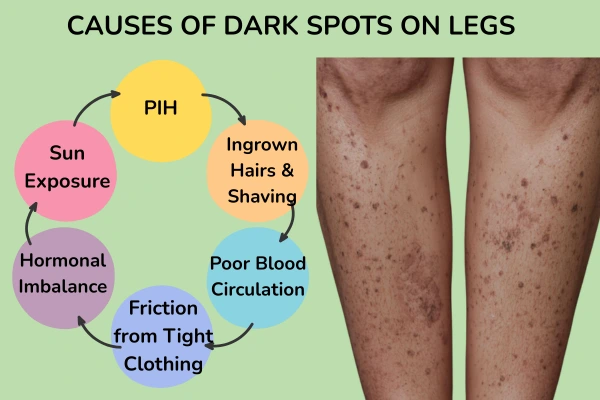
To treat dark spots on legs successfully, identifying the root factors responsible for increased melanin production is the first step.
Post-Inflammatory Hyperpigmentation (PIH): This is the most common cause of dark spots on legs. Any inflammation, such as insect bites, folliculitis, rashes, or allergic reactions, can trigger excess melanin production during healing.
Itchy Black Spots on Legs Due to Chronic Scratching: Persistent itching caused by eczema, contact dermatitis, or fungal infections often leads to dark itchy spots on legs. Repeated scratching thickens the skin and worsens pigmentation.
Shaving, Waxing, and Ingrown Hairs: Improper hair removal techniques can inflame hair follicles, resulting in folliculitis and dark spots on leg skin. These marks are especially common in individuals with sensitive or acne-prone skin.
Sun Exposure on Legs: Legs are often exposed to UV rays without sunscreen. Over time, sun damage accelerates melanin production, causing dark spots on lower legs that become more prominent.
Dry Skin & Poor Barrier Function: Lack of adequate skin hydration weakens the barrier function, making the skin more susceptible to pigmentation after minor damage.This is one of the most commonly overlooked causes of dark spots on legs.
Underlying Medical Conditions: Conditions like insulin resistance, thyroid disorders, or nutritional deficiencies may contribute to persistent pigmentation. In such cases, these spots are caused by systemic issues and require medical evaluation.
Genetics and Aging: Some individuals are more prone to pigmentation due to family history or natural skin aging.
Symptoms of Dark Spots on Legs: How to Identify Them Correctly
Recognizing dark spots on legs as symptoms helps determine whether simple care is enough or medical treatment is required.
Common symptoms include:
Brown or black patches on legs that persist for weeks or months
Spots that darken after healing from wounds or bites
Mild thickening of skin in chronically scratched areas
If dark spots are accompanied by severe itching, pain, swelling, or rapid spreading, prompt dermatological evaluation is strongly recommended.
How to Remove Dark Spots on Legs: What Actually Works?
If you are searching for how to remove dark spots on legs, it is important to understand that there is no single solution. Treatment depends on the depth of pigmentation, duration, skin type, and underlying cause. Dermatologists follow a structured, stepwise approach for safe and lasting results.
Step 1: Detailed Skin Evaluation & Diagnosis
Every effective treatment begins with accurate diagnosis. A dermatologist assesses:
Individual skin type and sensitivity levels
Level of pigmentation within the skin layers
Previous history of itching, infections, or hair removal practices
Lifestyle patterns and extent of sun exposure
Treating dark spots on legs without identifying the root cause often leads to recurrence or worsening pigmentation.
Step 2: Topical Medical Treatments
Clinically proven topical agents include:
Retinoids help speed up skin cell turnover and promote renewal.
Anti-inflammatory agents to suppress pigment activation
Barrier-repair moisturizers to restore healthy skin function
These treatments are carefully customized to fade dark marks on legs while preventing new pigmentation.
Step 3: Advanced Dermatological Procedures
For deeper or long-standing pigmentation, dermatologists may recommend advanced procedures for faster and visible improvement:
Chemical Peels: Controlled exfoliation that removes pigmented skin layers and boosts skin renewal.
These procedures are performed under expert supervision and tailored to skin sensitivity and pigmentation severity.
Step 4: Oral Medications (When Required)
Recommended if pigmentation is linked to infections or other skin conditions; may include antifungal, antibacterial, or antiviral drugs.
Home Remedies for Dark Spots on Legs: What Helps and What Doesn’t
Many patients try natural remedies before consulting a dermatologist. While some ingredients may support mild pigmentation, they should never replace medical treatment for persistent spots.
Helpful Natural Remedies (Mild Cases Only)
Aloe vera for soothing inflammation
Licorice extract for mild brightening
Oatmeal-based scrubs for gentle exfoliation
Proper hydration and moisturization
What to Avoid
Lemon juice or baking soda (can worsen pigmentation)
Harsh scrubs that damage the skin barrier
Random treatments without diagnosis
Home remedies work best as supportive care, not standalone solutions.
How to Prevent Dark Spots on Legs from Coming Back
Prevention is as important as treatment. Dermatologists strongly emphasize long-term skin care strategies.
Daily Prevention Tips
Apply broad-spectrum sunscreen on exposed legs
Moisturize daily to maintain skin barrier
Avoid scratching itchy areas.
Use proper hair removal techniques.
Treat insect bites and rashes early.
Medical Prevention
For individuals prone to pigmentation, maintenance creams and periodic dermatology follow-ups help prevent recurrence of spots on legs.
When Should You See a Dermatologist?
You should consult a dermatologist if:
The spots on legs persist beyond 8–12 weeks
Spots are itchy, painful, or spreading
Home remedies show no improvement
Pigmentation affects confidence or quality of life
Early professional care prevents deeper pigmentation and reduces treatment duration.
These spots on legs may be common, but they are highly treatable with the right medical approach. Understanding the causes of dark spots on legs, recognizing symptoms early, and choosing dermatologist-guided treatments make all the difference. Instead of hiding your legs or experimenting endlessly with home remedies, investing in the right diagnosis and care can restore not just your skin tone, but also your confidence.
At Evenly Skin & Hair Clinic, our dermatologist-led treatments focus on medical accuracy, skin safety, and visible results. If you are struggling with dark spots on your lower legs, expert care can help you achieve smoother, clearer, and healthier-looking skin.
Your legs deserve the same professional attention as your face, and the results are worth it.
Evenly Skin and Hair Clinic – HSR Layout
Third Floor, 815, 27th Main Rd, above Bluestone, 1st Sector, HSR Layout, Bengaluru, Karnataka 560102
Evenly Skin and Hair Clinic – Jayanagar
35, Ground Floor, Vinyas Arcade, 11th Main Rd, Vishya Bank Colony, 5th Block, Jayanagar, Bengaluru, Karnataka 560041
Friction, eczema, or circulatory issues can cause hyperpigmentation. Professional evaluation ensures safe treatment.
Do itchy black spots on legs always mean an infection?
Not always. Itchy black spots on legs can occur due to eczema, allergic reactions, insect bites, or dry skin. However, fungal or bacterial infections can also cause itching and pigmentation, so proper diagnosis is essential.
Are dark spots on legs a sign of a serious medical condition?
Most dark spots on legs are harmless and related to hyperpigmentation. However, if the spots are rapidly spreading, painful, bleeding, or changing in color or shape, it is best to consult a dermatologist for evaluation.
Can shaving or waxing cause dark spots on legs?
Yes. Improper shaving, waxing, or frequent ingrown hairs can inflame hair follicles and lead to post-inflammatory hyperpigmentation, causing dark spots on leg skin.
Are dark spots on legs common in people with diabetes?
Yes. People with diabetes may develop dark patches on their legs due to poor circulation, insulin resistance, or slower wound healing. Proper blood sugar control along with dermatological treatment is essential.
Why do dark spots on legs worsen after scratching or itching?
Scratching damages the skin barrier and increases inflammation. This stimulates melanocytes to produce more pigment, resulting in darker and more stubborn spots over time.
We hope this information is helpful. If you have any skin and hair-related questions or would like to discuss personalized solutions, please reach out to us at 7337899030. Our team of specialists is committed to delivering personalized care tailored to your specific needs. Take the first step towards a healthier, more confident you by scheduling a consultation with us today. Your journey to vibrant skin and stronger hair begins here.
Post Views:829
Book an Appointment
Start your journey to healthy skin and hair today.






Leave a Comment