Ingrown hairs are among the most frustrating and uncomfortable skin concerns, especially when they repeatedly appear after shaving, waxing, or even routine grooming. These tiny red bumps may seem harmless initially, but when they become painful, inflamed, infected, or leave behind dark scars, the problem can feel overwhelming. If you are someone who has tried warm compresses, exfoliators, tweezers, serums, and home remedies without relief, this dermatologist written blog is for you. Keep reading and get rid of ingrown hairs with dermatologist approved treatments.
At Evenly Skin & Hair Clinic, we see countless women and men struggling with stubborn ingrown hairs on the neck, face, underarms, legs, bikini line, and pubic area. Many patients walk in saying they don’t know how to get rid of ingrown hairs permanently or even who can remove ingrown hair safely without worsening it.
This dermatologist-approved guide brings you evidence-based treatments, explains why ingrown hairs occur, and outlines permanent solutions with prevention strategies. By the end, you’ll know exactly which ingrown hair treatments work, which ones don’t, and when it’s time to seek professional help.
What is an Ingrown Hair? What Really Happens Under the Skin
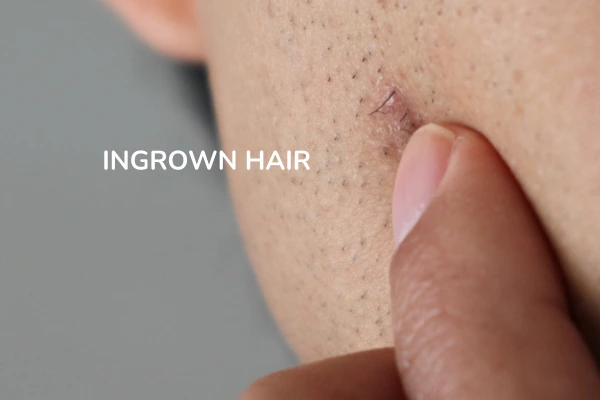
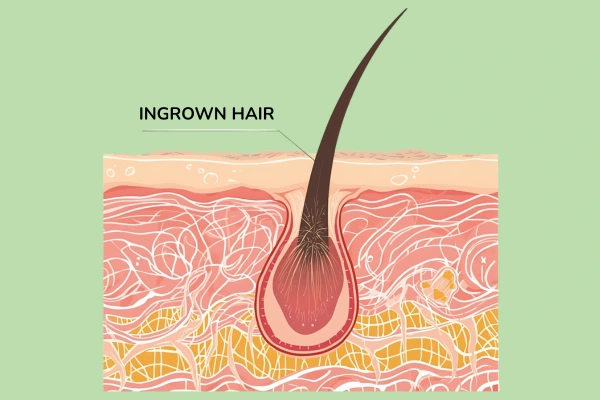
An ingrown hair forms when a hair fails to grow outward normally. Instead, it bends, curls, or re-enters the skin, leading to inflammation. Dermatologically, this process is known as pseudofolliculitis, and it can affect both men and women.
There are two major ways ingrown hairs form:
Transfollicular Ingrowth
The hair grows outward but curls back into the skin.
Common on: Beard region, neck, bikini line, and underarms
Intrafollicular Ingrowth
In this type, the hair never exits the follicle. It coils within the follicular canal and forms deeper, painful bumps.
Common on: Pubic region, legs, thick, coarse hair areas
When this happens repeatedly, the condition becomes chronic and may result in persistent inflammation, hyperpigmentation, follicular scarring, cyst formation, pus-filled lesions, and dark ingrown hair scars.
Why Some People Get More Ingrown Hairs Than Others
A dermatologist looks at several contributing factors:
Hair Texture: Curly, coarse, and thick hair is more prone to bending backward—this explains the high incidence of ingrown hair in beard areas, bikini lines, and underarms.
Genetics: Some patients naturally develop sharper hair tips after shaving, which increases the risk of pseudofolliculitis.
Shaving Practices: Dry shaving, shaving too close, multi-blade razors, and shaving against the direction of hair growth significantly increase the risk.
Waxing Technique: If waxing is done without stretching the skin, in the wrong direction, or too frequently, the chances of ingrown hair increase drastically.
Hormonal Influence: Higher androgen levels promote thicker and rapid hair growth, contributing to ingrown hair on legs, ingrown underarm hair, and ingrown pubic hair.
Tight Clothing and Friction: Underwear and clothing that repeatedly rub against the skin can push new hair shafts inward.
How to Identify an Ingrown Hair?
Patients often confuse ingrown hairs with acne or rashes. Dermatologists typically look for:
Small raised red bumps (papules)
Inflamed bumps containing pus, referred to as pustules
Tenderness or pain on touch
Dark discoloration (post-inflammatory hyperpigmentation)
Localised patches that turn itchy and sensitive
A visible hair loop under the skin
Severe cases progress to infected ingrown hair on the neck, cysts, or deep scars; these require immediate dermatologist intervention.
Where do Ingrown Hairs Commonly Occur
Neck and Beard Area: Frequent shaving with coarse hair is the main reason.
Pubic and Bikini Line: Moisture, friction, thick hair growth, and improper grooming contribute to painful and deep ingrown hairs, sometimes even the longest pubic ingrown hair that spirals under the skin.
Underarms: Sweat glands and tight clothing contribute. to ingrown hair in underarms. And patients often need ingrown underarm hair treatment.
Legs and Thighs: Shaving and dryness contribute to ingrown hair with dark spots.
Face: Especially in women with hormonal hair growth.
How to Get Rid of Ingrown Hairs Permanently:Dermatologist Ingrown Hair Treatment
Dermatologist’s opinion
Treating ingrown hair goes far beyond plucking the trapped hair. A dermatologist focuses on three main goals:
Releasing the trapped hair shaft
Reducing inflammation & preventing infection
Preventing recurrence by modifying the hair growth cycle
Below are the most effective and medically recommended ingrown hair removal treatments.
Laser Hair Reduction (LHR): Permanent Solution for Recurring Ingrown Hair
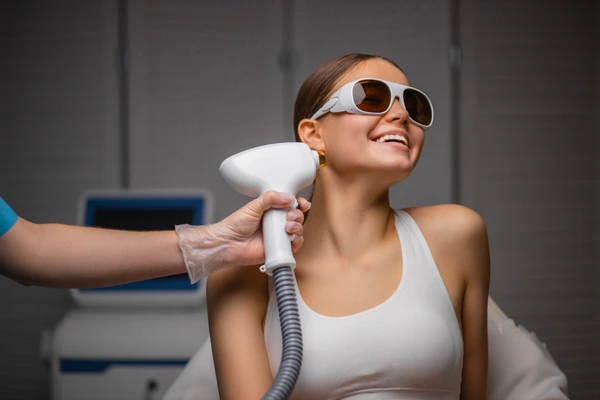
Laser hair reduction is widely considered a treatment for individuals experiencing repeated or severe ingrown hair, especially in areas such as the neck, bikini line, underarms, face, legs, and pubic region.
LHR works on the principle of selective photothermolysis, where a specific light wavelength targets melanin in the hair shaft. This light converts to heat, travels down the shaft, reaches the hair bulb, and destroys the follicle.
Why This Helps with Ingrown Hair
Once the follicle is partially or fully destroyed, hair becomes fine, softer, and grows slower, reducing the chance of re-entering the skin.
Laser reduces the density of hair, lowering friction and inflammation.
The heat from the laser also reduces bacterial colonization, preventing infected ingrown hair on the neck, bikini line, underarms, and legs.
How Many Sessions Are Needed?
Most patients require 6–8 sessions, but chronic beard-area or bikini area ingrown hair may require up to 10 sessions. or more.
Chemical Peels: Medical Exfoliation for Ingrown Hair & Scars
Chemical peels help both treat and prevent ingrown hair. They work on the skin surface to reduce blockage and encourage healthy follicular growth.
How Chemical Peels Work
Dermatologists use AHA and BHA acids:
Salicylic Acid (BHA) penetrates deep into oil glands.
Glycolic Acid (AHA) exfoliates dead skin, enhances cell turnover, and keeps follicles open.
Lactic acid improves hydration while gently exfoliating.
Why They’re Effective for Ingrown Hair
Clears dead skin around the follicle
Reduces inflammation
Prevents the follicle from closing and trapping hair
Lightens dark ingrown hair scars caused due to ingrown hair
How Many Sessions Are Needed?
6-8 sessions spaced 4 weeks apart.
Topical Retinoids (Tretinoin, Adapalene)
Topical retinoids are one of the most dermatologist-recommended treatments for mild to moderate ingrown hair.
How Do Retinoids Work?
Retinoids regulate follicular keratinization.
This means they reduce dead cell buildup.
Prevent the follicle from getting blocked
Encourage the hair to grow outward normally
It is ideal for early ingrown hairs, stubborn ingrown hairs on the legs or thighs, face-based ingrown hairs in women, and mild razor bumps.
What NOT to Do if You Have an Ingrown Hair
Many patients worsen their condition by making these common mistakes.
Digging or poking with needles or tweezing
Using old or multiple-blade razors
Pressing or popping inflamed bumps
Applying harsh scrubs on inflamed skin
Waxing repeatedly on irritated skin
These habits cause deeper ingrowth, infection, scarring, and more inflammation.
How to Prevent Facial or Body Ingrown Hair?
Allow the hair to grow out naturally for a few days instead of using methods like shaving, waxing, tweezing, or threading.
Consider Full Body Laser Hair Reduction (LHR) if you experience ingrown hairs frequently.
Avoid shaving extremely close to the skin. When the blade cuts the hair too sharply, the tip becomes pointed and more likely to re-enter the skin.
If you prefer waxing, ensure it is done in the correct direction. Hair must be pulled in the opposite direction of natural growth to prevent breakage at the surface.
Always use a clean, sharp, single-blade razor instead of multi-blade options.
Exfoliate the skin 2–3 times a week to prevent the buildup of dead skin cells.
Hydrate and nourish the skin daily.
Deep cleanse areas prone to sweating or friction, such as the underarms, bikini line, and neck.
Who Can Remove Ingrown Hair Safely?
Only a qualified dermatologist should remove deep or stubborn ingrown hairs, especially those on the neck, pubic area, and face. Improper extraction can cause permanent scars.
Ingrown hairs can be stubborn, painful, and frustrating, but they are 100% treatable with the right dermatologist and the right plan. Whether you’re struggling with ingrown neck hair, ingrown hair on legs, pubic ingrown hair, or repeated infections, modern dermatology offers safe, effective, and long-lasting solutions.
If you want clearer skin, fewer bumps, and permanent freedom from ingrown hairs, Evenly Skin & Hair Clinic is here to help.
Book your dermatologist consultation today and start your journey toward smoother, healthier, ingrown hairs.
BeforeAfter
Evenly Skin and Hair Clinic – HSR Layout
Third Floor, 815, 27th Main Rd, above Bluestone, 1st Sector, HSR Layout, Bengaluru, Karnataka 560102
Evenly Skin and Hair Clinic – Jayanagar
35, Ground Floor, Vinyas Arcade, 11th Main Rd, Vishya Bank Colony, 5th Block, Jayanagar, Bengaluru, Karnataka 560041
Mild ingrown hairs may resolve naturally in a few days as the hair eventually pushes through the skin surface. However, inflamed, painful, or deep ingrown hairs rarely go away on their own. If left untreated, they may turn into cysts, infections, or dark scars.
Can a dermatologist remove ingrown hair safely?
Yes. Dermatologists use sterile tools and USFDA-approved laser techniques to safely remove deep or chronically trapped hairs. This method prevents trauma, scarring, and infection.
Is laser hair removal the most effective solution for recurring ingrown hairs?
Absolutely. Laser Hair Reduction (LHR) reduces hair growth from the root, making hair finer, softer, and less likely to curl back under the skin. It is the most effective long-term treatment for chronic ingrown hairs on the face, neck, underarms, legs, and pubic area.
Can ingrown hairs cause dark spots or scars?
Yes. Ingrown hairs often lead to post-inflammatory hyperpigmentation, which appears as brown or dark spots, especially in deeper skin tones.
Should I squeeze or pick ingrown hairs?
No. Squeezing or digging at ingrown hairs can push the hair deeper, introduce bacteria, and trigger scarring. It also worsens inflammation. Always avoid needles or tweezers at home—seek a dermatologist for safe extraction.
Can ingrown hairs happen due to hormonal imbalance?
Yes. High androgen levels can lead to thicker, faster-growing hair, especially in women with PCOS. This increases the risk of ingrown facial hair, pubic hair, and neck hair.
We hope this information is helpful. If you have any skin and hair-related questions or would like to discuss personalized solutions, please reach out to us at 7337899030. Our team of specialists is committed to delivering personalized care tailored to your specific needs. Take the first step towards a healthier, more confident you by scheduling a consultation with us today. Your journey to vibrant skin and stronger hair begins here.
Post Views:1,362
Book an Appointment
Start your journey to healthy skin and hair today.







Leave a Comment