Bumps From Shaving: Why They Appear & What Dermatologists Recommend
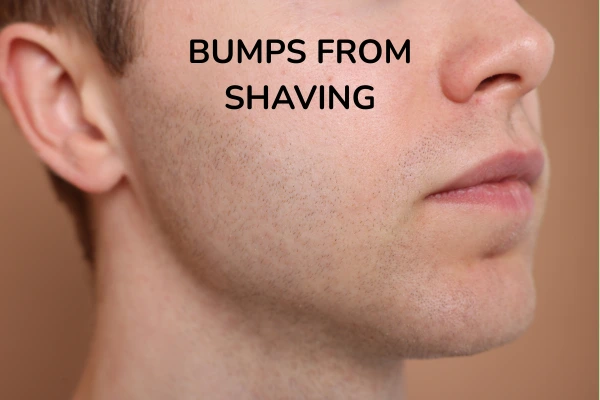
You shaved for smooth skin, but instead you were left with red, painful pimples or raised bumps. If this sounds familiar, you’re experiencing a very common reaction after shaving. These bumps from shaving are often mistaken for acne, but in reality, they are ingrown hair-related inflammatory lesions, medically referred to as shaving-induced follicular inflammation.
Pimples after shaving can develop anywhere hair is removed using a razor, such as the face, beard area, legs, underarms, pubic region, scalp, or back. While they are not dangerous, they can be uncomfortable, itchy, cosmetically distressing, and sometimes painful.
With the right skincare approach and medical guidance, bumps from shaving can be treated and prevented effectively.
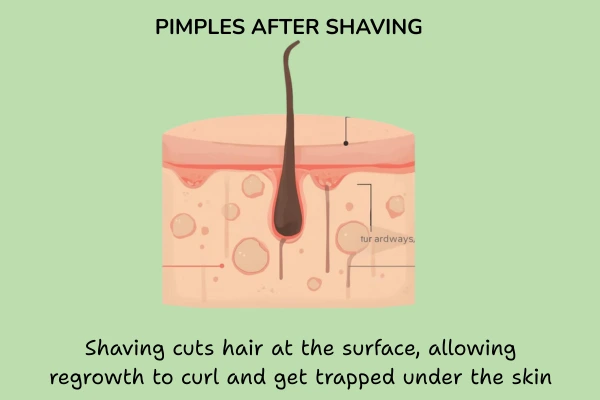
To understand how do you get rid of bumps from shaving, you must first understand what causes them. Shaving removes hair at the surface level, not from the root. As a result, the hair tip that grows back may curl or grow sideways instead of outward. When this happens, the hair gets trapped beneath the skin, triggering inflammation.
From a dermatologist’s point of view, pimples after shaving occur due to four main mechanisms:
Ingrown Hair Reaction (Pseudofolliculitis Barbae)
After shaving, hair may grow back into the skin rather than out of it. The body recognizes this as a foreign body and triggers an inflammatory response, leading to:
Dead skin cells and excess oil can block freshly shaved hair follicles. When the follicle opening is sealed, trapped hair and bacteria cause inflamed shaving bumps, redness, itching, and white or yellow pus-filled pimples. This explains why pimples after shaving legs or the pubic area can worsen rapidly.
Micro-Cuts Caused by Shaving
Razors often create microscopic cuts in the skin. These tiny breaks after shaving allow bacteria to enter, leading to infected pimples, burning sensations, and tenderness, particularly on sensitive skin.
Irritant or Allergic Contact Dermatitis
Sometimes, shaving bumps are not hair related at all. Fragrances, alcohol-based aftershaves, or harsh shaving creams can trigger:
Burning
Redness
Small itchy bumps
This is commonly seen in women who experience pimples after shaving the face, as facial skin is thinner and more reactive.
Why Certain Areas Are More Prone to Pimples After Shaving
Not all skin behaves the same. Let’s break down why bumps from shaving affect different body areas differently.
Pimples After Shaving Face (Men & Women)
The face has:
Dense hair follicles
High oil gland activity
Frequent shaving repetition
In men, pimples after shaving the beard are often deeper and more inflammatory due to thicker hair shafts. In women, pimples after shaving the face are often linked to irritation, hormonal sensitivity, or product reactions.
Pimples After Shaving Beard
Beard hair is thick, curly, and deeply rooted. When shaved too closely, the sharp hair tip curls back into the skin, causing classic ingrown hair bumps.
Pimples After Shaving Pubic Area
The pubic region is warm, moist, and friction-prone. This environment encourages:
Bacterial growth
Severe folliculitis
Painful cyst-like bumps
This makes the pubic area one of the most stubborn zones for shaving-related pimples.
Pimples After Shaving Legs
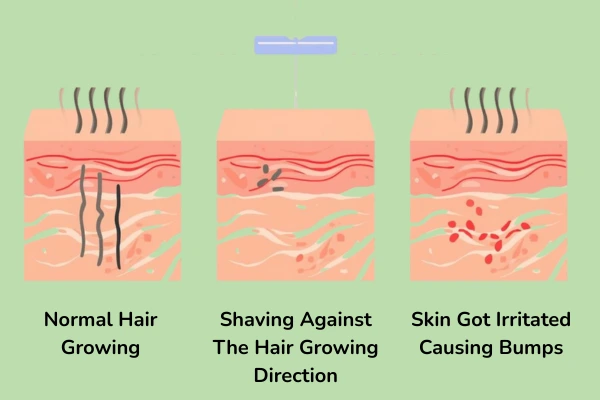
Here, dry skin and blunt razors are the main culprits. Shaving against hair growth often worsens inflammation.
Pimples After Shaving Head
Scalp skin is sensitive and vascular. Aggressive shaving can easily cause razor bumps, folliculitis, and post-inflammatory pigmentation.
How Do You Get Rid of Bumps from Shaving?
The treatment depends on severity, skin type, and the area involved. Dermatologists usually recommend a stepwise approach. If shaving bumps are mild, early intervention can prevent them from worsening.
Step 1: Pause Shaving Temporarily
This allows inflamed follicles to settle. Continuing to shave over bumps only deepens inflammation.
Step 2: Cleanse, Don’t Scrub
Use a gentle, non-foaming cleanser. Avoid physical scrubs, as they worsen micro-tears and irritation.
Step 3: Introduce Chemical Exfoliation
Dermatologist-recommended ingredients include:
Salicylic acid – clears follicular debris
Glycolic acid—improves cell turnover
Lactic acid – gentle exfoliation for sensitive skin
These ingredients help reduce bumps from shaving and prevent recurrence.
If bumps recur despite correct shaving habits, professional dermatological treatments may be required.
Below are commonly recommended in-clinic options:
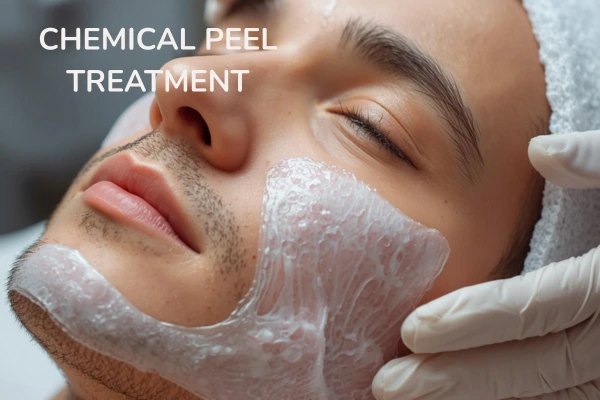
Chemical Peels
At Evenly, our dermatologists prescribe glycolic and salicylic acid chemical peels for ingrown hair-related pimples. These alpha and beta hydroxy acid peels help:
Removes dead skin buildup
Prevents pore blockage
Calms inflammation
This makes them especially effective for pimples after shaving the face, beard, legs, and pubic area.
This is why persistent bumps from shaving deserve medical attention rather than repeated home experiments.
Shaving bumps are not a failure of hygiene or technique alone. They are a biological skin response influenced by hair type, skin sensitivity, inflammation, and bacterial balance.
Once you understand how to get rid of bumps from shaving from a medical standpoint, the solution becomes clearer and far more effective.
If you’re experiencing repeated pimples after shaving the face, beard, pubes, legs, or head, consulting a dermatologist can prevent long-term skin damage and restore confidence. At Evenly Skin & Hair Clinic, dermatologist-led treatment plans are tailored to your skin type, hair pattern, and lifestyle, because smooth skin should never come at the cost of skin health.
Evenly Skin and Hair Clinic – HSR Layout
Third Floor, 815, 27th Main Rd, above Bluestone, 1st Sector, HSR Layout, Bengaluru, Karnataka 560102
Evenly Skin and Hair Clinic – Jayanagar
35, Ground Floor, Vinyas Arcade, 11th Main Rd, Vishya Bank Colony, 5th Block, Jayanagar, Bengaluru, Karnataka 560041
Why do I get pimples after shaving even when I use a clean razor?
Pimples after shaving are not caused by hygiene alone. Even with a clean razor, shaving can push hair back into the skin, cause micro-cuts, or clog hair follicles with dead skin and oil.
Are bumps from shaving the same as acne?
No. Bumps from shaving are different from acne. Most shaving bumps are caused by ingrown hairs or follicular inflammation, whereas acne is linked to excess oil production, bacteria, and hormonal factors. However, shaving bumps can look like acne and may become infected if not treated properly.
Why are pimples after shaving more common on the beard and pubic area?
The beard and pubic regions have thicker, curlier hair and more friction, making them more prone to ingrown hairs. These areas also experience warmth and moisture, which increases bacterial growth, leading to more severe shaving bumps.
Can women get pimples after shaving the face?
Yes. Pimples after shaving the face in women are common, especially in those with sensitive skin or hormonal fluctuations. Irritation from razors, waxing, or hair-removal creams can trigger inflammation and shaving-related breakouts.
Does shaving against hair growth cause more bumps?
Yes. Shaving against hair growth increases the risk of hair re-entering the skin, leading to ingrown hairs and shaving bumps. Dermatologists recommend shaving in the direction of hair growth to reduce irritation.
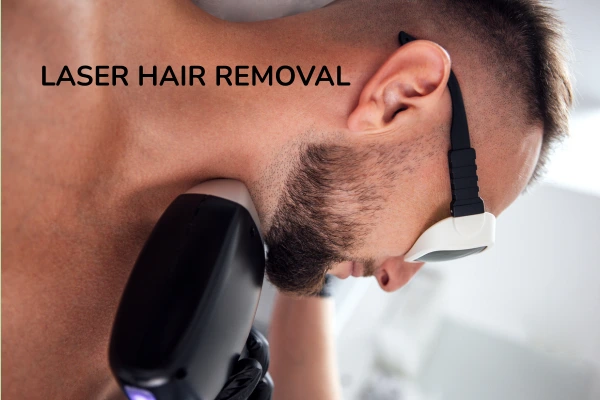
Can laser hair reduction help with pimples after shaving?
Yes. Laser Hair Reduction (LHR) is one of the most effective long-term solutions for recurrent shaving bumps. It reduces hair thickness and regrowth, which significantly lowers the risk of ingrown hairs and pimples after shaving the face, beard, legs, or pubic area.
Is laser hair reduction safe for sensitive or acne-prone skin?
When performed under dermatological supervision using the right technology and settings, laser hair reduction is safe for sensitive and acne-prone skin. A personalized skin assessment is essential before starting treatment.
We hope this information is helpful. If you have any skin and hair-related questions or would like to discuss personalized solutions, please reach out to us at 7337899030. Our team of specialists is committed to delivering personalized care tailored to your specific needs. Take the first step towards a healthier, more confident you by scheduling a consultation with us today. Your journey to vibrant skin and stronger hair begins here.
Post Views:230
Book an Appointment
Start your journey to healthy skin and hair today.





Leave a Comment