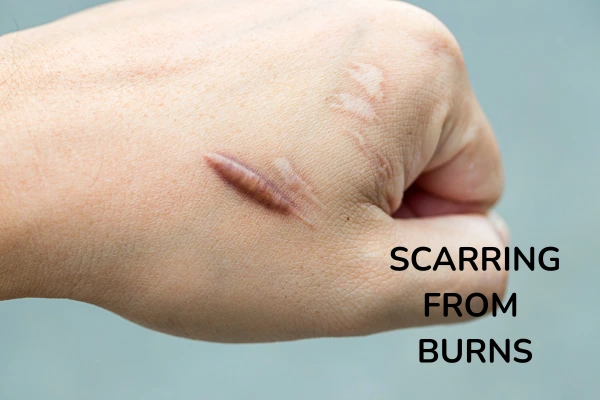
A minor kitchen accident, a splash of hot oil, accidental contact with steam, or even prolonged sun exposure, burns often happen when we least expect them. While the pain of a burn may fade within days or weeks, scarring from burns can last much longer, sometimes becoming a permanent reminder on the skin.
Many patients’ common concern is, “The burn healed, but the mark didn’t go away.”
Scarring from burns can affect confidence, appearance, and quality of life, especially when the scars are visible on the face, neck, hands, or other exposed areas. With the right understanding, early care, and advanced dermatological treatments, burn marks on skin and facial burn scars can be effectively reduced.
This article explains, in simple yet medical terms, why scars from burns form, how to prevent scarring from a burn, how to reduce scarring from a burn, whether burn scars can be removed permanently, and how to remove burn scars safely and effectively using advanced treatment options.
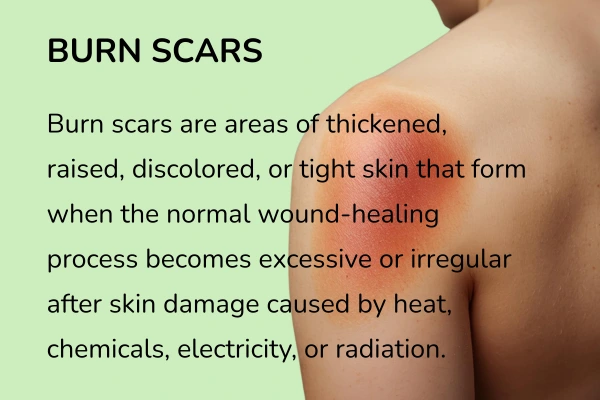
When skin is exposed to extreme heat, chemicals, electricity, or radiation, the protective layers of the skin get damaged. To repair this injury, the body activates a wound-healing response involving fibroblasts and collagen production.
In normal healing, collagen forms evenly and gradually remodels. However, in burn injuries, this process often becomes excessive or disorganized. As a result, scars of burns may develop as thickened, discolored, raised, or tight areas of skin.
Factors That Increase the Risk of Scarring From Burns
Deep second-degree or third-degree burns
Delayed wound healing
Infection during recovery
Excessive inflammation
Genetic tendency to scar
Inadequate wound care
The depth of the burn, duration of the injury, and speed of healing largely determine whether the mark fades or becomes permanent.
Burn Severity and Its Role in Scarring
Rather than focusing only on symptoms, dermatologists assess burns based on how deeply the skin layers are affected, as this directly influences scarring outcomes.
Superficial Burns: These affect only the outer skin layer. Redness and mild discomfort are common, and scarring is usually minimal if treated properly.
Partial-Thickness Burns: These penetrate deeper into the skin, often causing blistering and inflammation. Without proper care, these burns frequently lead to burn marks on skin.
Full-Thickness Burns: These are severe injuries affecting deeper tissues. Healing is slow, and the risk of permanent scars from burns and restricted movement is high.
Understanding burn depth helps determine how to reduce scarring from a burn effectively.
Different Forms of Burn Scars You May Notice
Burn scars do not look the same in every person. Their appearance depends on individual healing patterns and skin type.
Correct identification of scar type is essential before deciding how to get rid of burn marks on skin effectively.
How to Prevent Scarring From a Burn: Early Care Makes the Difference
The first few days after a burn injury are critical. Early intervention can significantly lower the risk of scarring from burns.
Immediate Steps After a Burn
Cool the area gently with running water.
Avoid applying home remedies or harsh substances.
Keep the wound clean and protected.
Seek medical attention for deep or painful burns.
Dermatologist-Recommended Prevention Measures
Use prescribed topical antibiotics or healing creams.
Silicone-based gels or sheets once the wound closes
Strict sun protection to prevent pigmentation
Regular follow-ups to monitor healing
Timely care plays a major role in preventing facial burn scars, which are often more noticeable.
How to Reduce Scarring From a Burn After Healing
Once the skin heals, many people search for how to reduce scarring from a burn. At this stage, treatment depends on scar maturity and severity.
What Helps in Early Healing of Scars
Moisturization to maintain skin barrier
Sunscreen to prevent darkening
Gentle massage to improve circulation
What Usually Doesn’t Work Alone
Home remedies for old scars
Scratching or peeling healing skin
Random over-the-counter creams
Aggressive scrubbing or peeling
Vitamin E oil on open wounds
For visible or persistent scars, medical treatments offer the best results.
Advanced Burn Scar Removal Treatment Options That Actually Work
Modern dermatology offers multiple scientifically proven solutions for burn scars on skin and face. The choice depends on scar depth, location, and skin type.
Laser Treatment for Burn Scars
Laser therapy is one of the most effective solutions for facial burn scars and burn marks on skin. It helps remodel collagen, improve texture, and reduce pigmentation.
A personalized treatment plan delivers the best outcome for scars from burns.
How to Remove Scars From Face Permanently: Is It Really Possible?
Medically speaking:
Complete disappearance may not always be possible.
Significant improvement (70–90%) is achievable with consistent treatment.
Texture, color, and visibility can be dramatically reduced.
With advanced technology, facial burn scars can be softened, flattened, and blended with surrounding skin, making them far less noticeable.
Can Burn Scars Be Removed Completely?
Most burn scars can be treated effectively, but results depend on scar age, scar type, burn depth, and treatment consistency.
What we aim for:
Improved skin texture
Reduced pigmentation
Better elasticity
Natural-looking skin restoration
Possible Complications If Burn Scars Are Ignored
Untreated burn scars may lead to:
Recurrent skin infections
Tightness and restricted movement
Persistent pigmentation
Emotional distress and low confidence
This is why dermatologists recommend medical evaluation for persistent burn marks on skin.
Why Choose a Dermatologist for Burn Scar Treatment?
Burn scar management is medical—not cosmetic. Dermatologists understand:
Skin healing biology
Scar behavior over time
Correct energy settings for lasers
Safe treatment for Indian skin tones
This expertise prevents complications and ensures safer, more predictable results.
Burn scars often affect how people feel about their appearance. Facial scars, in particular, may lead to anxiety or self-consciousness. Modern dermatology focuses on restoring confidence along with skin health.
Scarring from burns no longer has to be permanent or overwhelming. With early care, correct diagnosis, and advanced dermatological treatments, scars of burns can be significantly reduced and safely treated.
If you’re dealing with burn marks on skin or facial burn scars, know that solutions exist, and the earlier you start, the better the outcome.
Evenly Skin and Hair Clinic – HSR Layout
Third Floor, 815, 27th Main Rd, above Bluestone, 1st Sector, HSR Layout, Bengaluru, Karnataka 560102
Evenly Skin and Hair Clinic – Jayanagar
35, Ground Floor, Vinyas Arcade, 11th Main Rd, Vishya Bank Colony, 5th Block, Jayanagar, Bengaluru, Karnataka 560041
Scarring from burns occurs when the deeper layers of the skin are damaged. During healing, the body produces excess collagen to repair the injury. When collagen forms unevenly or excessively, it results in scars from burns, which may appear raised, dark, tight, or thickened.
How to remove scars from face permanently after a burn?
Complete removal may not always be possible, but dermatological treatments can reduce scar visibility by up to 80–90%. The goal is to improve texture, color, and blending with surrounding skin for a natural appearance.
Can burn scars be removed completely with laser treatment?
Laser treatment does not erase scars completely, but it significantly improves their appearance. It helps remodel collagen, reduce redness, flatten raised scars, and lighten pigmentation, making burn scars far less noticeable.
Which burn scars respond best to treatment?
Newer scars respond better than older ones. Raised, pigmented, and superficial scars show excellent improvement with timely treatment. Long-standing or deep scars may need combination therapies.
Can untreated burn scars cause complications?
Yes. Untreated scars may lead to:
Skin tightness and restricted movement
Recurrent itching or discomfort
Emotional distress and low confidence
This is why dermatological evaluation is recommended.
Is surgery always required for severe burn scars?
No. Surgery is reserved for select cases where scars severely restrict movement or cause functional problems. Many burn scars improve significantly with nonsurgical dermatological treatments.
Can burn scars cause itching or pain years later?
Yes. Burn scars may remain itchy or sensitive due to nerve involvement or dryness. Treatments aimed at scar softening and skin repair can relieve these symptoms.
We hope this information is helpful. If you have any skin and hair-related questions or would like to discuss personalized solutions, please reach out to us at 7337899030. Our team of specialists is committed to delivering personalized care tailored to your specific needs. Take the first step towards a healthier, more confident you by scheduling a consultation with us today. Your journey to vibrant skin and stronger hair begins here.
Post Views:2,126
Book an Appointment
Start your journey to healthy skin and hair today.





Leave a Comment