Have you observed changes in your skin tone, such as increased darkness, dullness, or uneven pigmentation after being outdoors? Facial tanning is a common concern, particularly in cities like Bangalore, where daily commuting, outdoor activities, and prolonged sun exposure can affect skin tone. If you are in search of how to remove tan from face or facial tan, the first step is understanding what is causing the darkening. Uneven skin tone can also be caused by conditions like melasma and post-inflammatory hyperpigmentation (PIH), even though sun exposure is a significant contributor.
Mild tanning may gradually improve with consistent skincare and sun protection. However, persistent pigmentation may require dermatologist-guided treatment.
In this article, we explain why facial tanning occurs, how to remove tan from face safely at home, which professional treatments may help, and how to prevent further pigmentation.
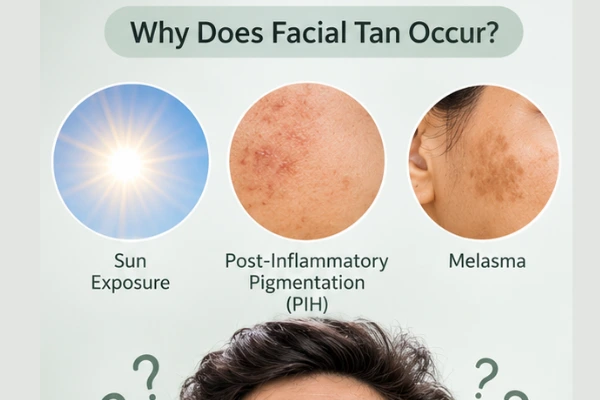
Facial tanning occurs when the skin produces more melanin, the natural pigment responsible for skin colour. This process is a protective response to ultraviolet (UV) radiation from sunlight.
However, not every dark patch on the face is ordinary sun tan. Understanding the underlying cause helps determine the right approach.
Sun exposure
UVA and UVB rays stimulate melanin production, which can make exposed areas of the face appear darker. Repeated exposure can also contribute to sunspots, uneven pigmentation, and premature skin ageing.
People who commute regularly, spend time outdoors, or forget to reapply sunscreen may notice gradual changes in their complexion.
Post-inflammatory hyperpigmentation (PIH)
Post-inflammatory hyperpigmentation develops when the skin produces excess pigment following inflammation or injury. Acne, insect bites, burns, irritation and aggressive skincare treatments can leave brown or dark marks.
These marks can become more noticeable with further sun exposure, particularly in skin types that are prone to pigmentation.
Melasma
Melasma is a pigmentation condition characterised by brown or grey-brown patches, commonly appearing on the cheeks, forehead, upper lip and chin.
Sunlight, hormonal changes, genetic factors and visible light can contribute to melasma. Unlike ordinary tanning, melasma may persist for years and often needs ongoing management.
Knowing whether you have sun tan, acne-related pigmentation or melasma is important because each condition requires a different treatment approach.
How to Remove Facial Tan at Home
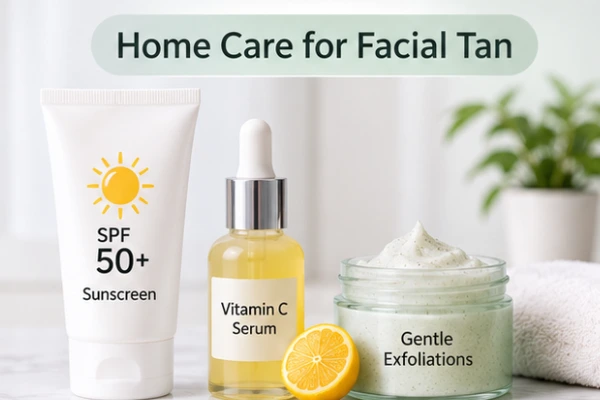
If you have mild tanning or superficial pigmentation, a consistent skincare routine can help improve your skin’s appearance. Focus on maintaining the skin barrier while avoiding products that may irritate the skin.
Use broad-spectrum sunscreen daily.
Sunscreen is the most important step when managing facial tan and pigmentation.
Choose a broad-spectrum sunscreen with SPF 30 or higher. If you have melasma or persistent pigmentation, consider a tinted sunscreen containing iron oxides, which can also help protect against visible light.
Follow these simple steps:
Apply sunscreen generously before going outdoors.
Make sure to reapply every two hours when you are outside.
Apply sunscreen again whenever you swim, sweat heavily, or wipe your face with a towel.
Wear sunglasses and a broad-brimmed hat to protect your skin from direct sunlight.
Use sunscreen even on cloudy days.
Consistent sun protection helps prevent further darkening and supports other pigmentation treatments.
Include gentle exfoliation.
Exfoliation helps remove accumulated dead skin cells and may improve dullness and uneven texture.
Depending on your skin type, suitable products may contain:
Glycolic acid for surface exfoliation.
Lactic acid for gentler exfoliation.
Salicylic acid for oily and acne-prone skin.
Start with a low concentration and use exfoliating products gradually. Over-exfoliation can irritate the skin and worsen pigmentation, particularly in people prone to post-inflammatory hyperpigmentation.
Use antioxidant-based skincare.
Antioxidants work alongside sunscreen to help protect the skin and maintain overall skin health.
Some useful ingredients include:
Vitamin C: Helps improve the appearance of uneven skin tone and provides antioxidant protection.
Niacinamide: Helps maintain a healthy skin barrier while improving the appearance of dark spots and uneven skin tone.
Azelaic acid: May help manage acne-related pigmentation and certain forms of uneven skin tone.
Vitamin E: Provides antioxidant support and is commonly included in moisturising formulations.
Introduce new products gradually. If you notice ongoing burning, redness or discomfort, discontinue the product and consult a dermatologist for guidance.
Avoid harsh home remedies.
Applying lemon juice, baking soda, undiluted vinegar or abrasive scrubs to the face is not a safe way to remove tan.
These remedies can irritate the skin, damage its protective barrier and potentially cause additional pigmentation.
Rather than trying several home remedies, it is better to follow a simple skincare routine with ingredients suited to your skin’s needs.
Dermatologist Treatments for Facial Tan and Pigmentation
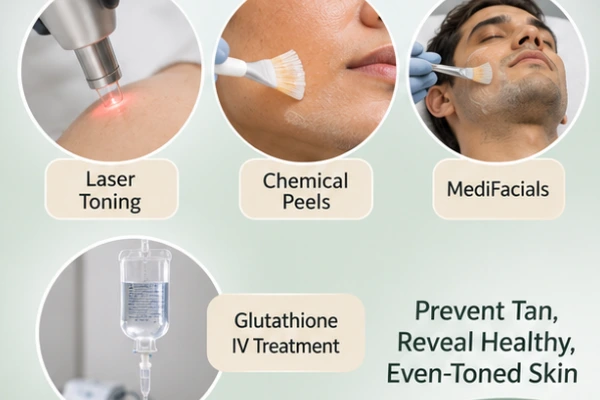
When facial tanning or pigmentation does not improve with regular skincare, professional treatments facial tanning treatments may be considered.
The right procedure depends on the type of pigmentation, its depth, skin sensitivity and medical history. At Evenly Skin & Hair Clinic, a dermatologist can assess these factors before recommending a suitable treatment.
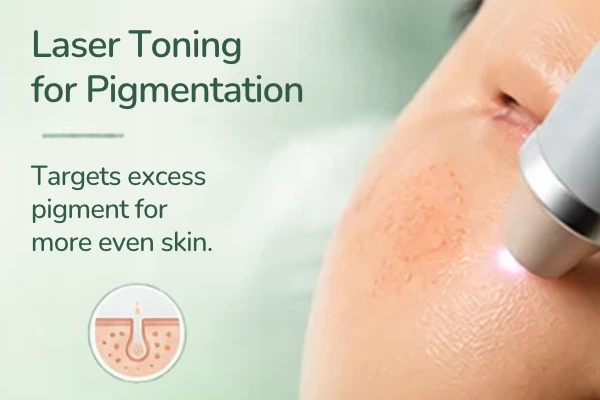
Laser toning uses controlled laser energy to target excess pigmentation. Selected low-fluence Q-switched Nd laser protocols may be considered for certain pigmentary conditions.
The treatment aims to improve uneven skin tone by targeting pigment within the skin.
Expected timeline: Improvement generally requires multiple sessions, with intervals determined by the dermatologist. Results vary depending on the pigmentation type and individual response.
Precautions: Incorrect settings or excessive treatment can cause irritation, uneven lightening or post-inflammatory hyperpigmentation. People with melasma require particularly careful assessment because pigmentation can recur or worsen after laser procedures.
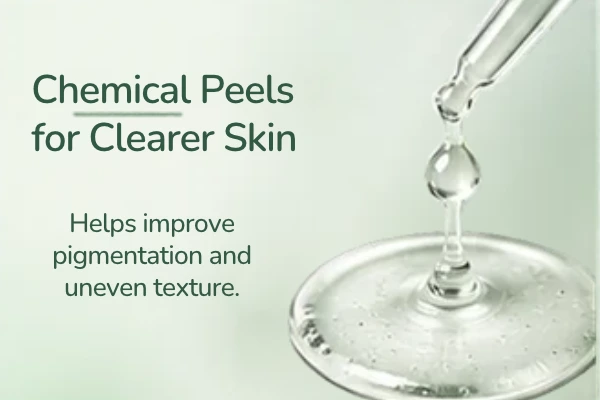
Chemical peels for facial pigmentation
Chemical peels use carefully selected exfoliating solutions to improve superficial pigmentation, acne marks and uneven skin texture.
Depending on the skin concern, dermatologists may recommend glycolic acid, lactic acid or salicylic acid peels.
Expected timeline: Mild changes may become noticeable after the skin recovers. A series of superficial peels may be recommended, depending on the condition and response.
Precautions: Temporary redness, dryness, peeling and sensitivity can occur. Post-treatment sunscreen and appropriate moisturisation are essential to reduce the risk of further pigmentation.
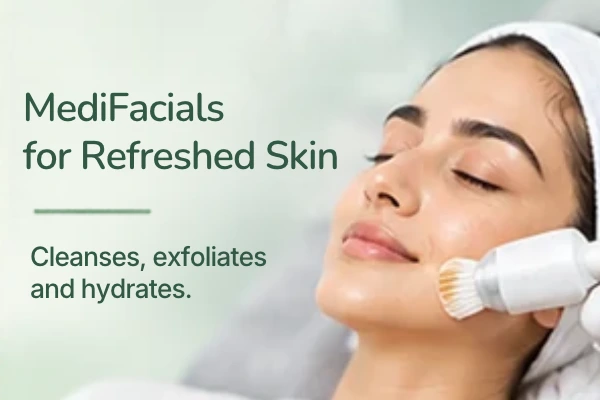
MediFacials for dull and uneven-looking skin
MediFacials are professional skin treatments designed to cleanse, exfoliate and hydrate the skin using selected products and techniques.
They may help improve surface texture, dehydration and dullness, giving the skin a fresher appearance.
Expected timeline: Improved hydration and a refreshed appearance may be noticeable immediately or within a few days.
Precautions: The procedure should be customised according to skin sensitivity and existing concerns. Aggressive exfoliation should be avoided in irritated skin or active pigmentation conditions unless specifically recommended by a dermatologist.
It is important to understand that MediFacials are not a permanent treatment for melasma or deeper pigmentation.
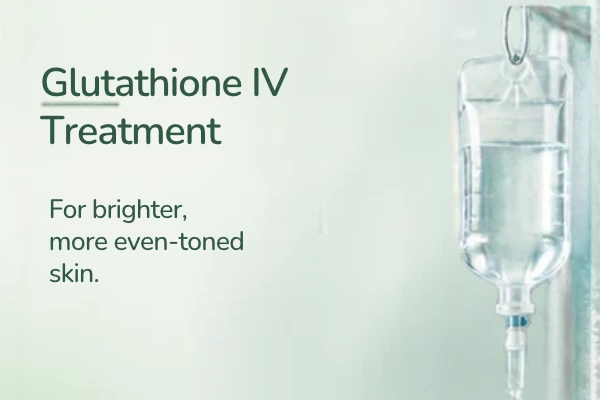
Glutathione IV Treatment for Skin Brightening
The body naturally produces glutathione, an antioxidant that helps protect cells. It has gained attention in aesthetic dermatology because of its proposed role in influencing melanin production and skin pigmentation.
Glutathione IV treatment involves administering glutathione intravenously. It is marketed in some aesthetic settings for skin brightening and improving the appearance of uneven skin tone.
It is an effective treatment for sun tan, melasma or stubborn facial pigmentation. It should not be presented as a guaranteed skin-lightening or tan-removal procedure, as there is no medical evidence.
IV glutathione may cause infusion reactions, allergic reactions and other potentially serious complications. The quality of injectable products, sterile administration and medical supervision are essential considerations.
Expected timeline: There is no reliably established treatment schedule or predictable timeline for cosmetic skin-lightening results from IV glutathione.
Which Treatment Is Suitable for Your Skin Concern?
The right approach for pigmentation varies from person to person. A dermatologist first identifies the cause before recommending whether a laser, chemical peel, or another treatment would be appropriate.
Skin concern
Possible approach
Mild sun tan and dullness
Sunscreen, suitable skincare, and MediFacials
Superficial pigmentation
Topical treatments and selected chemical peels
Acne-related dark marks
Acne management and pigmentation treatments
Melasma
Dermatologist-guided topical treatment and carefully selected procedures
Persistent uneven skin tone
Individualised combination treatment
Laser toning and chemical peels are not automatically suitable for everyone. A dermatologist should evaluate the skin before recommending a procedure, particularly for melasma and pigmentation-prone skin.
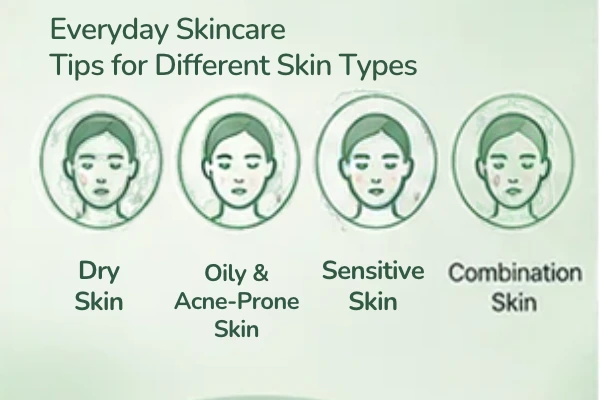
Everyday Skincare Tips for Different Skin Needs
You do not need an extensive skincare routine to manage facial tan. A few suitable products, used consistently, can make a difference.
For dry skin
Morning: Gentle cleanser, vitamin C serum if tolerated, moisturiser and broad-spectrum sunscreen.
Night: Gentle cleanser, moisturiser and a dermatologist-recommended pigmentation treatment if needed.
Opt for moisturisers that help maintain the skin’s natural protective barrier.
For oily and acne-prone skin
Morning: Gentle cleanser, niacinamide, lightweight moisturiser and non-comedogenic sunscreen.
Night: Cleanser, suitable acne or pigmentation treatment and lightweight moisturiser.
Avoid heavy products that may clog pores or aggravate breakouts.
For sensitive skin
Morning: Gentle cleanser, fragrance-free moisturiser and suitable broad-spectrum sunscreen.
Night: Gentle cleanser and barrier-supporting moisturiser.
Introduce active ingredients cautiously. Avoid frequent exfoliation and products that cause burning or irritation.
For combination skin
Morning: Gentle cleanser, vitamin C or niacinamide, lightweight moisturiser and sunscreen.
Night: Cleanser, suitable pigmentation treatment and moisturiser.
You may need different product textures for oily and dry areas of the face.
These routines are general starting points. Your dermatologist can tailor skincare recommendations to your individual skin needs and pigmentation patterns.
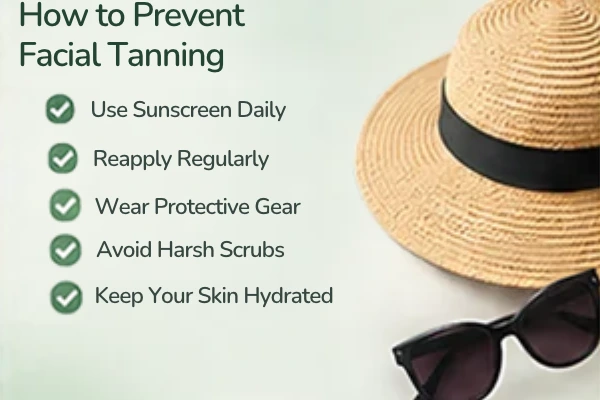
How to Prevent Facial Tanning
Protecting your skin from further UV damage is essential for managing pigmentation and preventing new dark spots from developing.
Here are some practical habits to follow:
Apply sunscreen before leaving home, including during short outdoor trips.
Reapply sunscreen every two hours when outdoors.
Protect your eyes and skin from direct sunlight by wearing UV-protective sunglasses and a hat with a broad brim.
Seek shade during prolonged outdoor activities.
Avoid harsh face scrubs and excessive exfoliation.
Do not pick acne or squeeze pimples, as this can leave dark marks.
Maintain a consistent moisturising routine.
Opt for gentle skincare products that meet your skin’s specific needs.
If you are prone to melasma, consider using a tinted sunscreen formulated with iron oxides, as it can provide added protection against visible light. Make sun protection a daily habit, as melasma may reappear even after the pigmentation has improved.
When Should You Consult a Dermatologist?
Home skincare may be sufficient for mild tanning, but persistent pigmentation needs professional evaluation.
Consider consulting a dermatologist if:
Facial pigmentation does not improve despite regular skincare.
Dark patches repeatedly return after sun exposure.
You may start seeing uneven brown discoloration across areas such as your cheeks, forehead and upper lip.
Even after active acne clears, the dark spots and marks it leaves behind can linger on the skin.
Your skin becomes irritated after using pigmentation products.
You notice a new, changing or unusual dark spot.
A dermatologist can assess what is causing the skin concern and suggest a treatment tailored to the individual’s needs, instead of depending on products that may not deliver the desired results.
How Can Evenly Skin & Hair Clinic Help With Facial Pigmentation?
At Evenly Skin & Hair Clinic, facial pigmentation concerns can be evaluated by a dermatologist to understand the underlying cause and determine suitable treatment options.
Depending on the diagnosis, treatment may include:
Laser toning: Selected laser protocols for suitable pigmentation concerns.
Chemical peels: To improve certain types of superficial pigmentation and uneven texture.
MediFacials: To support skin cleansing and hydration and improve dull-looking skin.
Glutathione IV treatment: Available as a separate cosmetic service, with appropriate medical consultation about its uncertain benefits and potential risks.
Customised skincare: To help maintain results and reduce the risk of recurring pigmentation.
The treatment plan should consider skin sensitivity, pigmentation depth, previous procedures and individual expectations.
During your consultation, you can discuss the recommended treatment, expected number of sessions, precautions, recovery time and transparent pricing before proceeding.
Facial tanning and pigmentation can develop for several reasons. Identifying what is causing the concern helps determine the most suitable treatment approach.
Consistent sunscreen use, gentle skincare and suitable active ingredients can help manage mild tanning and prevent further darkening. If pigmentation, melasma or acne marks continue to persist, a dermatologist can assess your skin and recommend appropriate treatment approaches.
At Evenly Skin & Hair Clinic, a personalised dermatological assessment can help you understand your skin concerns and explore options such as laser toning, chemical peels and MediFacials.
Looking for a dermatologist to remove tan from face or facial pigmentation treatment? Book a consultation at Evenly Skin & Hair Clinic to understand your skin concerns, discuss treatment options and receive a customised skincare plan.
Evenly Skin and Hair Clinic – HSR Layout
Third Floor, 815, 27th Main Rd, above Bluestone, 1st Sector, HSR Layout, Bengaluru, Karnataka 560102
Evenly Skin and Hair Clinic – Jayanagar
35, Ground Floor, Vinyas Arcade, 11th Main Rd, Vishya Bank Colony, 5th Block, Jayanagar, Bengaluru, Karnataka 560041
Third floor, Embassy Tower, 9/1/3, Mahatma Gandhi Rd, Near Treasure Island, South Tukoganj, Indore, Madhya Pradesh 452001
For health-related information, follow us on Instagram!!
Frequently Asked Questions
How long does a facial tan take to disappear?
Pigmentation concerns such as melasma and acne-related dark spots may require several months of treatment to improve. The time taken varies based on the underlying cause, how deeply the pigment is present in the skin and how consistently the recommended treatment is followed.
Can sunscreen alone remove facial tan?
Sunscreen does not directly remove existing pigmentation. However, it helps prevent further UV-induced darkening and supports the effectiveness of other pigmentation treatments.
Is laser toning better than chemical peels for facial tan?
Laser toning may be considered for selected pigmentary conditions, while chemical peels can help with certain superficial pigmentation concerns. The appropriate choice depends on the diagnosis, skin type and risk of post-treatment pigmentation.
Can MediFacials remove facial tan permanently?
MediFacials can improve hydration, surface texture and temporary dullness. However, they cannot permanently eliminate melasma or guarantee the removal of deeper pigmentation. Results depend on the treatment and underlying skin condition.
Can facial tanning happen even when I use sunscreen?
Yes. Insufficient application, missed areas, infrequent reapplication, sweating and prolonged exposure can reduce protection. Visible light may also aggravate certain pigmentation conditions, including melasma.
Can I use vitamin C and niacinamide together?
They are generally compatible and can be used in the same skincare routine if tolerated. Introduce them gradually, particularly if you have sensitive skin.
We hope this information is helpful. If you have any skin and hair-related questions or would like to discuss personalized solutions, please reach out to us at 7337899030. Our team of specialists is committed to delivering personalized care tailored to your specific needs. Take the first step towards a healthier, more confident you by scheduling a consultation with us today. Your journey to vibrant skin and stronger hair begins here.
Post Views:115
Book an Appointment
Start your journey to healthy skin and hair today.





Leave a Comment