If shaving has become part of your weekly routine, waxing keeps getting postponed because it is painful, or you are tired of seeing stubble return just days after removing it, you may have already wondered: Can laser hair reduction actually give long-lasting results, how laser hair reduction works? Or will the hair simply come back?
Laser hair reduction is not simply a faster way to remove the hair you can see on the surface. The treatment works deeper by delivering controlled laser energy to the pigment within the hair and damaging the follicle responsible for producing it. Because hair grows in different phases, one session cannot target every follicle at the same time.
So, how laser hair reduction works, how permanent the results can be, whether it works on facial hair, and why treatment settings matter are all important before you book a session.
At Evenly Skin & Hair Clinic, laser hair reduction is approached as a dermatological treatment rather than a routine cosmetic procedure. Your skin tone, hair thickness, treatment area, hair-growth pattern, and medical history all matter when creating a treatment plan.
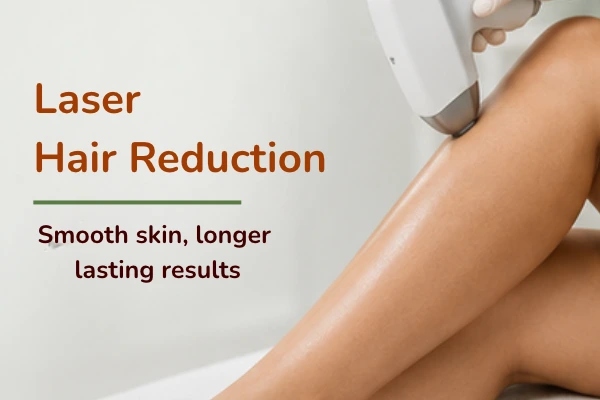
Laser hair reduction is a medical-aesthetic procedure that uses concentrated light energy to selectively heat the pigment in the hair shaft and follicle. The absorbed energy converts into heat, which damages the follicular structures responsible for continued hair growth.
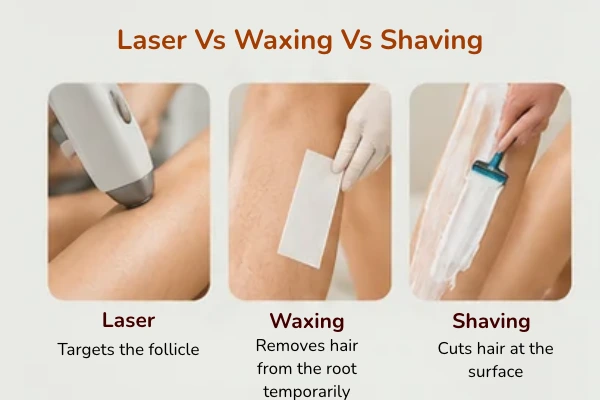
Unlike shaving, which cuts hair at the skin surface, or waxing, which temporarily removes it from the root, laser treatment aims to affect the hair follicle itself.
The treatment is sometimes described as “permanent hair removal,” but patients should understand the terminology carefully. Laser treatment can provide long-term and, in some treated areas, permanent hair reduction, although some regrowth and maintenance treatment may occur. Hormonal factors can significantly influence facial hair growth in women.
Therefore, the realistic goal is a progressive and long-lasting reduction in unwanted hair, rather than promising that every hair will disappear forever.
How Laser Hair Reduction Works Inside the Hair Follicle
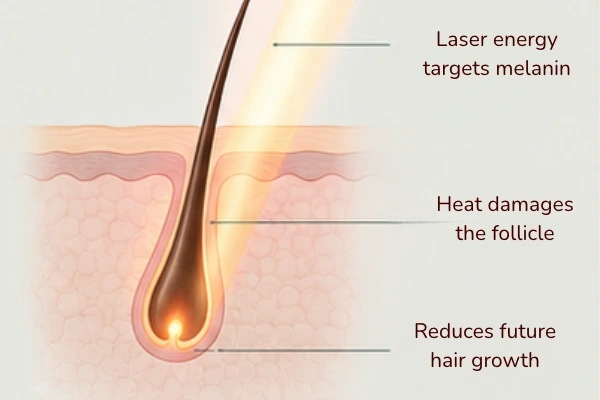
The easiest way to understand how laser hair reduction works is to follow the laser energy:
The laser emits a controlled wavelength of light.
Melanin in the hair absorbs the light energy.
The absorbed energy converts into heat.
This heat reaches the follicular structures.
The thermal effect damages the follicle’s ability to produce a strong hair.
With successive treatments, many targeted follicles become less productive.
This process is associated with selective photothermolysis, where the treatment aims to deliver sufficient energy to the target while protecting surrounding skin.
The result depends on more than simply using a laser. Wavelength, fluence, pulse duration, cooling, and other treatment parameters must be selected according to the individual’s skin and hair characteristics.
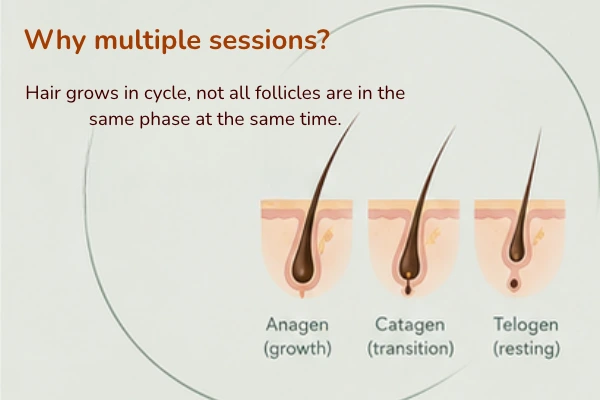
The reason one laser session cannot remove every hair is that hair grows in different phases, including the active growth phase known as anagen.
Your body hair does not grow at the same stage or time for all hairs.
Hair moves through different phases, including the active growth phase known as anagen. Follicles in different phases may respond differently to treatment.
Consequently, one laser session can affect some follicles while others may be less responsive at that time. Treatments are therefore spaced over several weeks so that different groups of follicles can be targeted during suitable growth phases.
This is one of the most important questions patients ask: is laser hair reduction permanent?
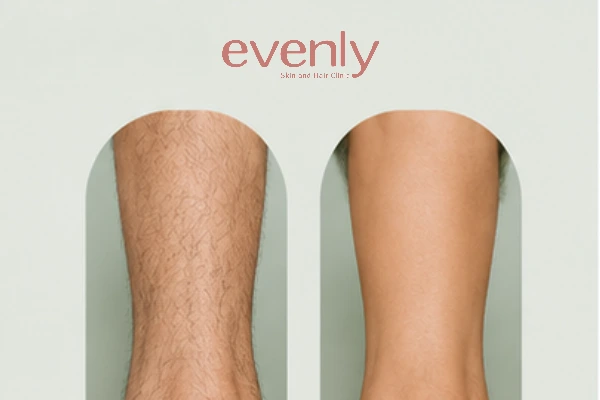
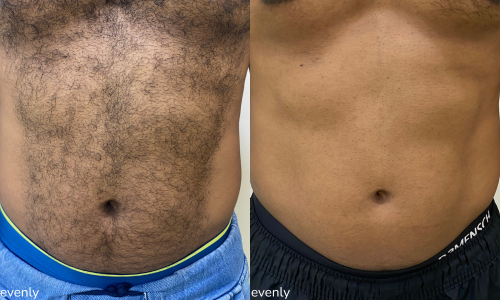
Laser treatment can produce a substantial and long-lasting reduction in hair growth. After a treatment course, many patients notice less hair, slower regrowth, and finer or less noticeable hair.
However, “permanent” does not mean that every follicle will remain inactive forever.
Some follicles may recover partially, while new hair growth can be influenced by hormones, genetics, age, and other factors. Facial hair in women may be particularly affected by hormonal changes.
Therefore, it is more accurate to think of laser treatment as progressive, long-term hair reduction, with maintenance treatment when necessary.
What if the hair grows back?
Regrowth does not automatically mean that treatment has failed. You may notice:
Less hair overall
Slower regrowth
Finer hair
Less noticeable hair
Reduced need for shaving
Fewer ingrown hairs in some cases
The goal is not simply to remove today’s visible hair but to progressively reduce the follicle’s ability to produce unwanted hair.
Does Laser Hair Reduction Work on Facial Hair?
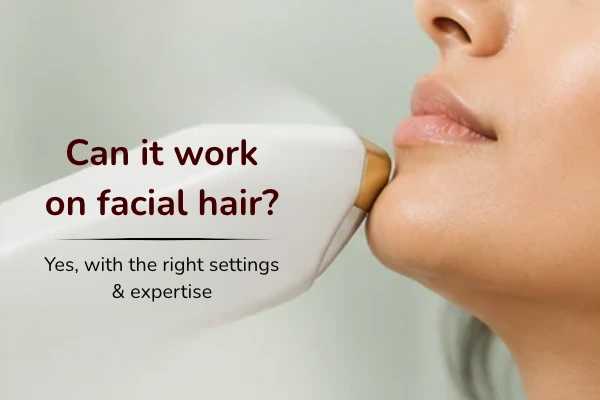
Yes, laser treatment can be used on areas of the face, including the upper lip, chin, and other suitable areas.
But facial hair needs a more individualized approach.
Does laser hair reduction work on facial hair? It can, particularly when the unwanted hair is sufficiently pigmented and coarse enough to respond to laser energy. But facial hair can be strongly affected by hormonal factors.
For women experiencing sudden or excessive facial hair, a dermatologist may also look beyond the hair itself.
If excessive facial hair is accompanied by irregular periods, acne, scalp hair thinning, weight changes, or other hormonal symptoms, the underlying cause may need medical evaluation.
This is an important difference between a medical laser consultation and simply booking a cosmetic hair-removal session.
The goal should not be to treat the visible hair without asking why the hair is growing excessively in the first place.
Why Fine Hair and Light-Colored Hair Can Be More Challenging
Laser technology relies substantially on pigment within the hair.
Therefore, coarse, dark hair generally provides a stronger target than very fine, blonde, grey, or white hair.
This does not mean that every person with lighter hair is automatically unsuitable. Rather, the expected response depends on the amount and distribution of pigment, the device, and the clinical settings.
A dermatologist should assess your hair and skin instead of promising identical results for everyone.
This is also why online claims such as “six sessions are enough for everyone” should be treated cautiously.
The number of sessions depends on the person, not simply the treatment name.
Why Your Hair Type Matters More Than You Think
Two people can undergo laser treatment on the same body area and experience different results.
Why?
Because hair is not simply “hair.”
Your dermatologist considers:
Hair thickness
Hair color
Hair density
Skin tone
Treatment area
Hormonal influences
Previous hair-removal methods
Hair-growth cycle
History of pigmentation or sensitivity
Previous tanning or sun exposure
Coarse, dark hair generally provides a stronger target for laser energy than very fine hair.
Meanwhile, areas affected by hormonal stimulation may require a different long-term strategy.
That is why an individual consultation is more useful than choosing a package based only on the number of sessions advertised.
Laser Hair Reduction vs. Waxing: What Is Actually Different?
If you have been waxing for years, you may think about whether switching to laser is worthwhile.
Laser hair reduction targets the follicle with controlled energy and aims to progressively reduce future hair growth.
Waxing mechanically removes hair from the root but does not thermally target the follicle in the way laser treatment does.
Shaving cuts hair at the skin surface without affecting the follicle.
Therefore, laser hair reduction vs waxing is not simply about which method removes hair faster. The bigger difference is what happens after the hair is removed.
Waxing needs to be repeated as hair regrows. Laser treatment involves a planned series of sessions with the objective of reducing future hair growth.
For someone who has spent years repeatedly shaving or waxing, this can make laser a useful long-term hair-reduction option.
Does Laser Hair Reduction Work for Ingrown Hairs?
Repeated shaving or waxing can contribute to irritation and ingrown hairs, particularly in people with coarse or curly hair.
By reducing the amount and thickness of regrowing hair, laser treatment may help reduce recurrent ingrown hairs in suitable patients.
But persistent or inflamed bumps should be assessed by a dermatologist because not every bump after hair removal is an ingrown hair.
What Happens During a Laser Hair Reduction Appointment at Evenly Clinic?
A medically supervised session begins with assessment of the treatment area. Your dermatologist may consider your skin type, hair characteristics, recent tanning, medications, previous reactions, and history of pigmentation or scarring.
The treatment area is then prepared, and appropriate protective eyewear is used.
During treatment, patients commonly describe the sensation as brief warmth, tiny pinpricks, or a snapping sensation. Cooling technology can improve comfort depending on the device and treatment area.
Treatment time varies. A small area such as the upper lip may take only a few minutes, while larger areas require more time.
How Many Sessions Will You Need?
There is no single number that applies to everyone.
The number of sessions depends on:
Treatment area
Hair thickness and density
Skin tone
Hair-growth cycle
Hormonal factors
Individual response
Instead of asking only, “How many sessions will I need?” ask:
“Based on my skin, hair type, and treatment area, what level of reduction can I realistically expect?”
That gives your dermatologist an opportunity to explain the treatment plan according to your individual characteristics.
Is Laser Hair Reduction Safe?
Laser hair reduction can be safe when appropriate technology, treatment settings, and medical supervision are used.
Temporary redness, swelling, and discomfort can occur. Less commonly, laser treatment can cause blistering, scarring, or changes in skin pigmentation.
This is particularly important for darker or pigmentation-prone skin, which is why treatment settings should be personalized.
Before booking, ask:
Who will assess my skin?
Who will perform the treatment?
What laser technology is being used?
How will the settings be selected for my skin and hair?
A personalised assessment is more valuable than choosing a treatment based only on price or the number of sessions in a package.
Even with appropriate treatment, certain habits can interfere with your treatment plan.
Expecting one session to do everything: Hair grows in cycles, so multiple sessions are usually required.
Comparing your results with someone else’s: Hair density, skin tone, hormones, and treatment areas differ between individuals.
Waxing between sessions without discussing it: Because laser targets the follicle, follow your dermatologist’s advice about hair-removal methods between sessions.
Ignoring sun exposure: Recent tanning can affect treatment planning and increase the risk of unwanted skin reactions.
Assuming facial hair behaves like leg hair: Hormonal influences can make facial hair management different, particularly in women.
Why a Dermatologist Consultation Matters
Laser hair reduction is not a one-size-fits-all procedure.
During consultation, your dermatologist can assess whether your hair is suitable for laser treatment, identify factors that may affect the response, and determine whether any underlying concern needs attention.
The objective should not be to sell you a fixed number of sessions. It should be to understand your skin and hair first and then recommend an appropriate treatment plan.
At Evenly Skin & Hair Clinic, a dermatologist can assess your skin tone, hair characteristics, treatment area, and individual concerns before recommending laser hair reduction.
If you have spent years shaving or waxing, it is natural to want one treatment that makes unwanted hair disappear forever.
But the science is more useful when we understand what laser treatment actually does.
Laser hair reduction progressively targets suitable hair follicles. With a planned course of treatment, many patients experience less hair growth, slower regrowth, and finer, less noticeable hair.
If unwanted facial or body hair is making you spend too much time shaving, waxing, or managing ingrown hairs, a dermatologist consultation at Evenly Skin & Hair Clinic can help you understand whether laser hair reduction is appropriate for you and what results you can realistically work toward.
Evenly Skin and Hair Clinic – HSR Layout
Third Floor, 815, 27th Main Rd, above Bluestone, 1st Sector, HSR Layout, Bengaluru, Karnataka 560102
Evenly Skin and Hair Clinic – Jayanagar
35, Ground Floor, Vinyas Arcade, 11th Main Rd, Vishya Bank Colony, 5th Block, Jayanagar, Bengaluru, Karnataka 560041
Third floor, Embassy Tower, 9/1/3, Mahatma Gandhi Rd, Near Treasure Island, South Tukoganj, Indore, Madhya Pradesh 452001
For health-related information, follow us on Instagram!!
Frequently Asked Questions
How does laser hair reduction work?
Laser hair reduction uses concentrated light energy that is absorbed by pigment in the hair. The energy converts to heat and damages the hair follicle, progressively reducing its ability to produce visible hair.
What is laser hair reduction?
It is a dermatological procedure designed to reduce unwanted hair growth by targeting hair follicles with controlled laser energy. Unlike shaving or waxing, it aims to affect the follicle rather than simply remove visible hair.
Is laser hair reduction permanent?
Laser treatment can provide long-lasting and, in many treated areas, permanent reduction. But some regrowth can occur, and maintenance sessions may be required. Facial hair in women can be more affected by hormonal changes.
Does laser hair reduction work on facial hair?
Yes. Laser treatment can be used for suitable facial hair, including areas such as the upper lip and chin. But facial hair can have a stronger hormonal component, so results and maintenance requirements can vary.
How many sessions are needed?
The number varies according to hair thickness, density, skin type, treatment area, and individual response. A dermatologist can provide a more meaningful estimate after assessing you.
Is laser hair reduction better than waxing?
They work differently. Waxing temporarily removes the hair from the root, whereas laser treatment targets the follicle to progressively reduce future hair growth. The right option depends on your goals, hair type, and skin.
Can laser hair reduction help with ingrown hairs?
Reducing coarse hair growth can help some people who experience recurrent ingrown hairs or shaving-related irritation. However, persistent bumps should be assessed by a dermatologist.
We hope this information is helpful. If you have any skin and hair-related questions or would like to discuss personalized solutions, please reach out to us at 7337899030. Our team of specialists is committed to delivering personalized care tailored to your specific needs. Take the first step towards a healthier, more confident you by scheduling a consultation with us today. Your journey to vibrant skin and stronger hair begins here.
Post Views:10
Book an Appointment
Start your journey to healthy skin and hair today.








Leave a Comment